Tell us about the job
Takes about a minute. No obligation.
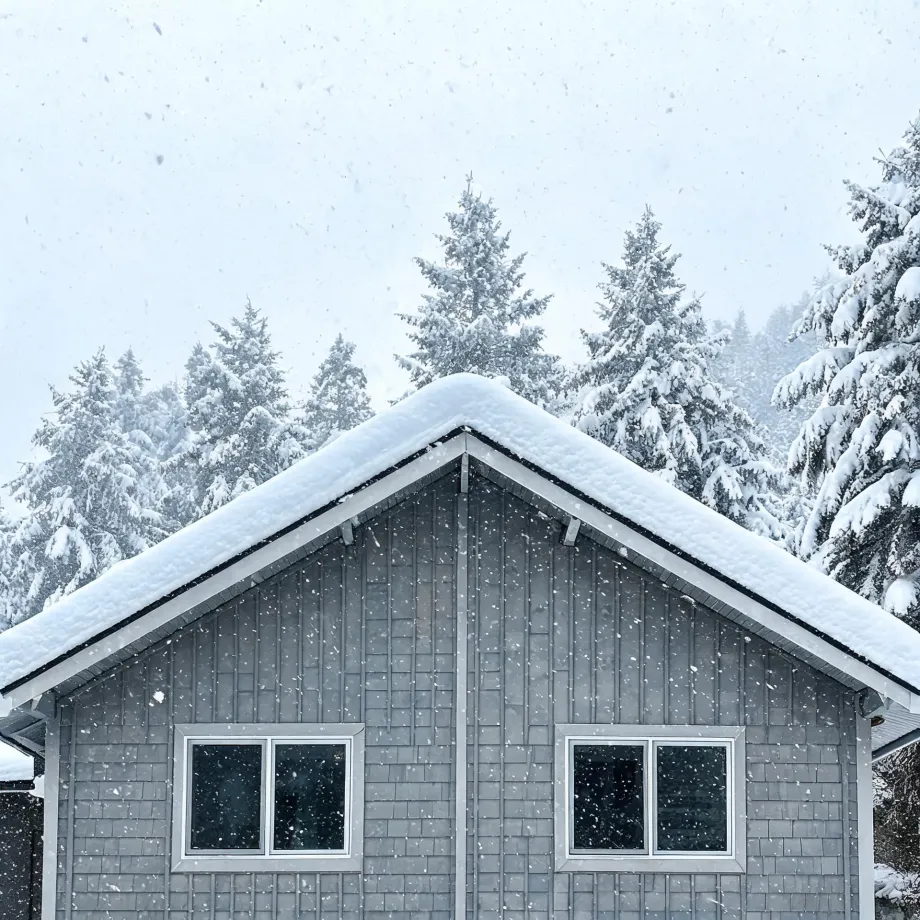
A contractor pricing a boiler repair in Teton County starts with the burner assembly and ignition system, because those are the parts that cycle every time the boiler fires. Homes in Teton County, ID run heat about ten months a year, from September through June. That kind of sustained runtime loads the heat exchanger and the igniter far harder than it loads the circulator pump or the expansion tank, and a diagnosis that skips combustion components first is working in the wrong order. Corrosion and carbon buildup on a burner are not incidental findings here; they are expected ones.
Boiler systems in housing this age run on parts that were already mature when the houses were built. Half the homes in Teton County, Idaho were built in 2001 or earlier (2020-2024 ACS 5-year). A contractor who opens a boiler here finds heat exchangers, zone valves, and expansion tanks spec'd to tolerances that current parts do not always match directly, and sourcing a replacement sometimes means working through a short list of compatible substitutes rather than pulling from a standard catalog. That parts availability question is often what determines repair scope and final cost, more than labor or the condition of the rest of the system.
The Parts of a Boiler a Contractor Checks First
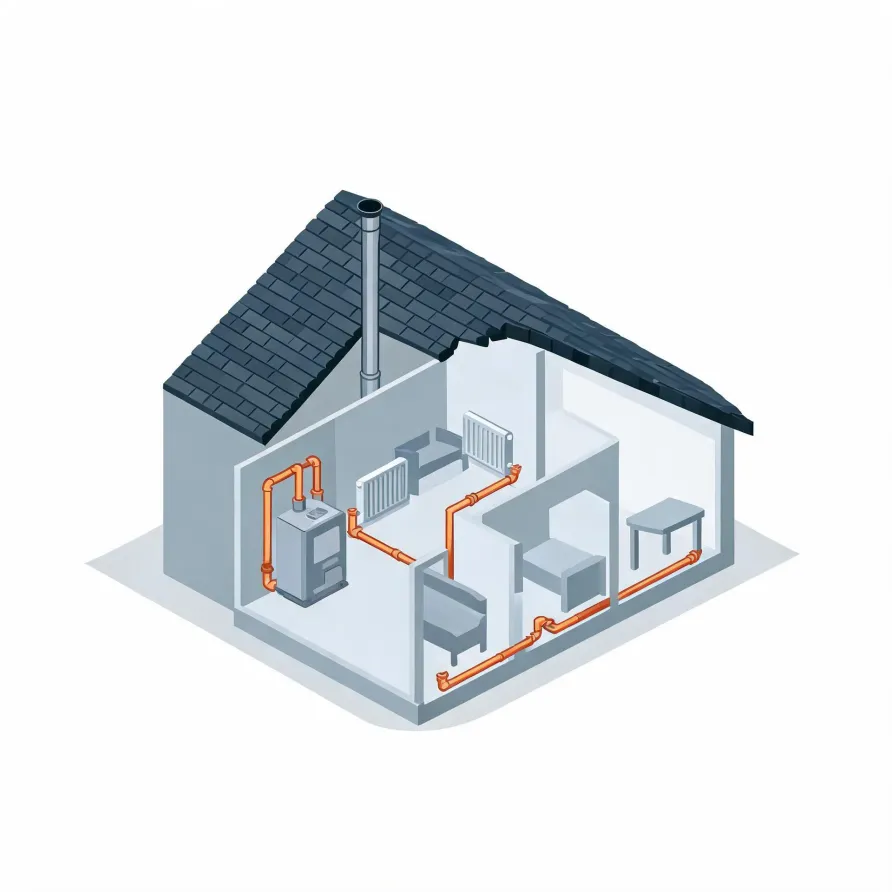
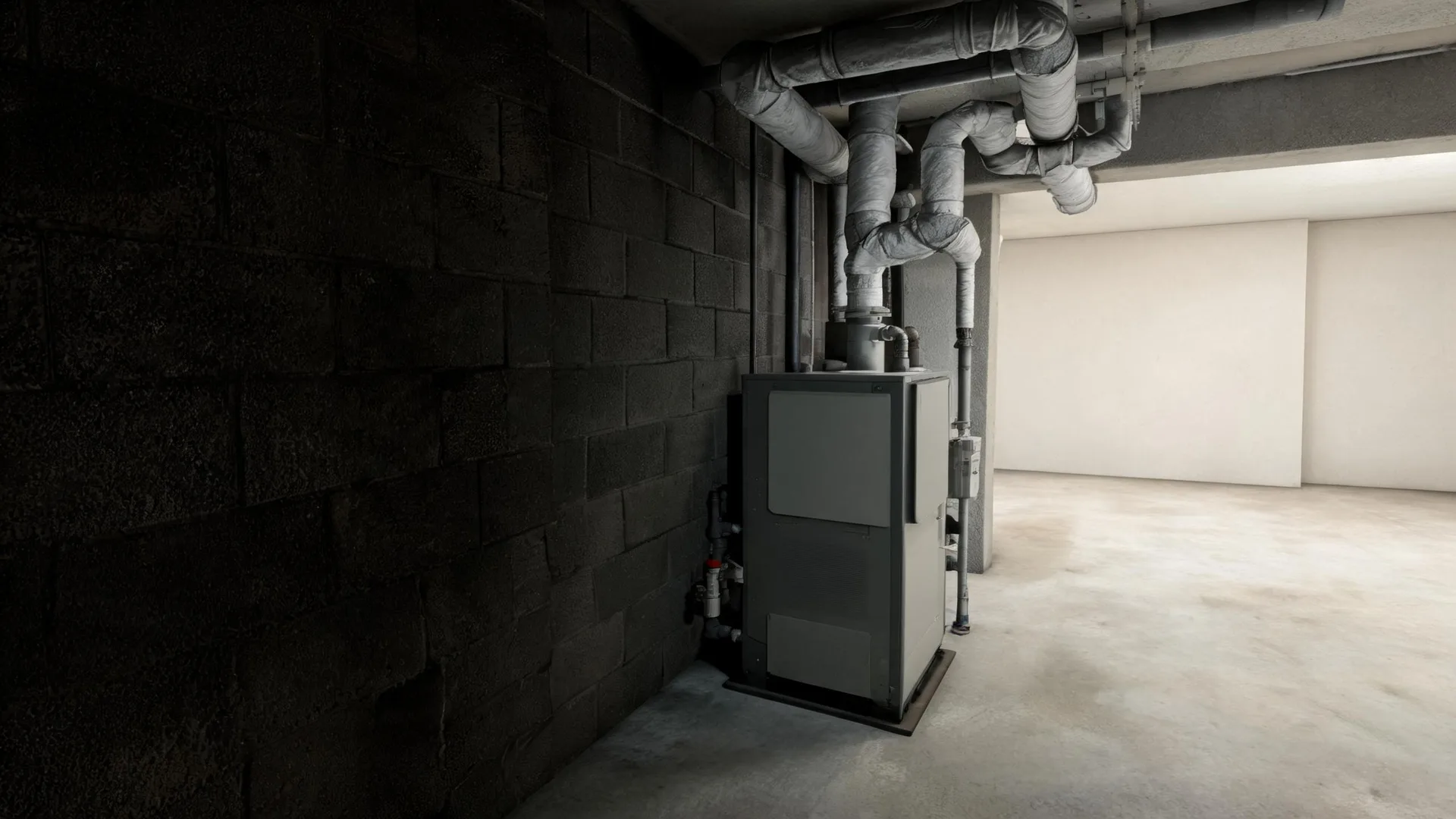
The boiler itself sits in a utility room, basement, or mechanical closet and is the unit that heats water for the whole system. When a boiler is running poorly, a contractor starts here: the burner, heat exchanger, and pressure vessel are where most faults show up. A failed burner means no heat; a cracked heat exchanger means the system cannot hold temperature.
From the boiler, a network of pipes carries hot water to radiators or baseboard units throughout the house, and each of those terminal units is its own point of failure. The circulator pump, expansion tank, and zone valves sit along those pipes and control flow and pressure. Any one of them can be the reason heat stops reaching a room or the system loses pressure.
The drawing shows a typical boiler layout, and a licensed contractor determines which components and configurations apply to your specific home.
Find a contractor in Teton CountyTeton County, Idaho, by the numbers
165 severe weather events were recorded in Teton County, Idaho between 2015 and 2024.
NOAA National Centers for Environmental Information, Storm Events Database, bulk CSV export, events 2015-01-01 through 2024-12-31.Half the homes in Teton County, Idaho were built in 2001 or earlier (2020-2024 ACS 5-year).
U.S. Census Bureau, 2020-2024 American Community Survey 5-Year EstimatesTeton County, Idaho holds 6,481 housing units (2020-2024 ACS 5-year).
U.S. Census Bureau, 2020-2024 American Community Survey 5-Year EstimatesOwners occupy 80.8% of the occupied homes in Teton County, Idaho (2020-2024 ACS 5-year).
U.S. Census Bureau, 2020-2024 American Community Survey 5-Year EstimatesBoiler & HVAC Repair Rules for Teton County, Idaho1 sourced standards and codes
Licensing and Legal Requirements in Teton County, Idaho
Idaho requires a state certificate of competency for heating, ventilation and air conditioning work: it is unlawful to engage in the business, trade or practice without passing the examination and holding the certificate.
Severe Weather Events in Teton County
Teton County's climate puts real load on boiler systems, and weather events are a direct part of that story. A boiler pushed hard through harsh conditions wears differently than one that runs easy, which is why local weather history matters when you're sizing up repair work.
165 severe weather events, 2015–2024. Source: NOAA National Centers for Environmental Information, Storm Events Database.