Tell us about the job
Takes about a minute. No obligation.
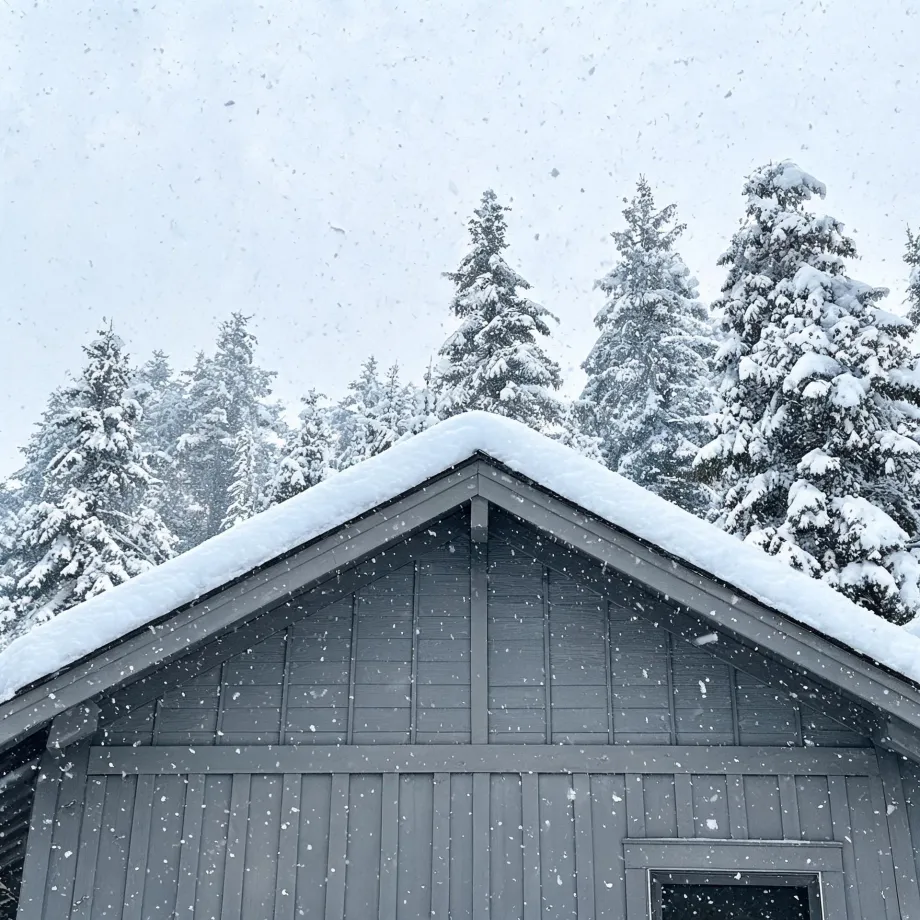
Sizing a boiler for this house is not a generic calculation. Homes in Teton County, ID run heat about ten months a year, from September through June. The burner and heat exchanger cycle through nearly the entire calendar, and a unit that runs undersized or with a poor combustion setup accumulates wear on those components faster than the numbers on the box suggest. A contractor quoting a replacement here has to establish the actual heat load of the structure before committing to equipment, because an install that is off by even a modest margin shows itself quickly when the system almost never stops.
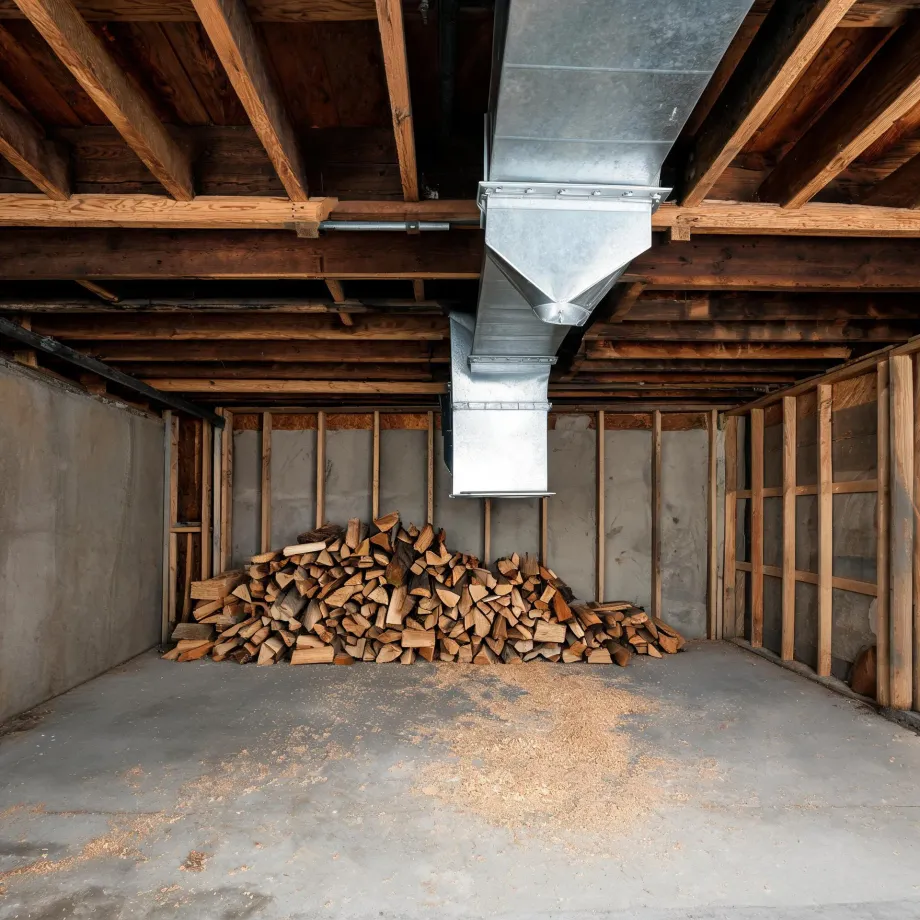
Ductwork routed for an earlier system often runs where a different configuration would not, and the electrical serving it was sized for what the house originally needed. Half the homes in Teton County, Idaho were built in 2001 or earlier (2020-2024 ACS 5-year). A contractor sizing a new boiler here works out early whether the existing layout can carry it, because a mismatch between the old routing and the new equipment adds scope that no quote can skip. Where the ductwork lines up, the job moves cleanly. Where it does not, the house itself sets the schedule.
What a Boiler Installation Puts in Your Home
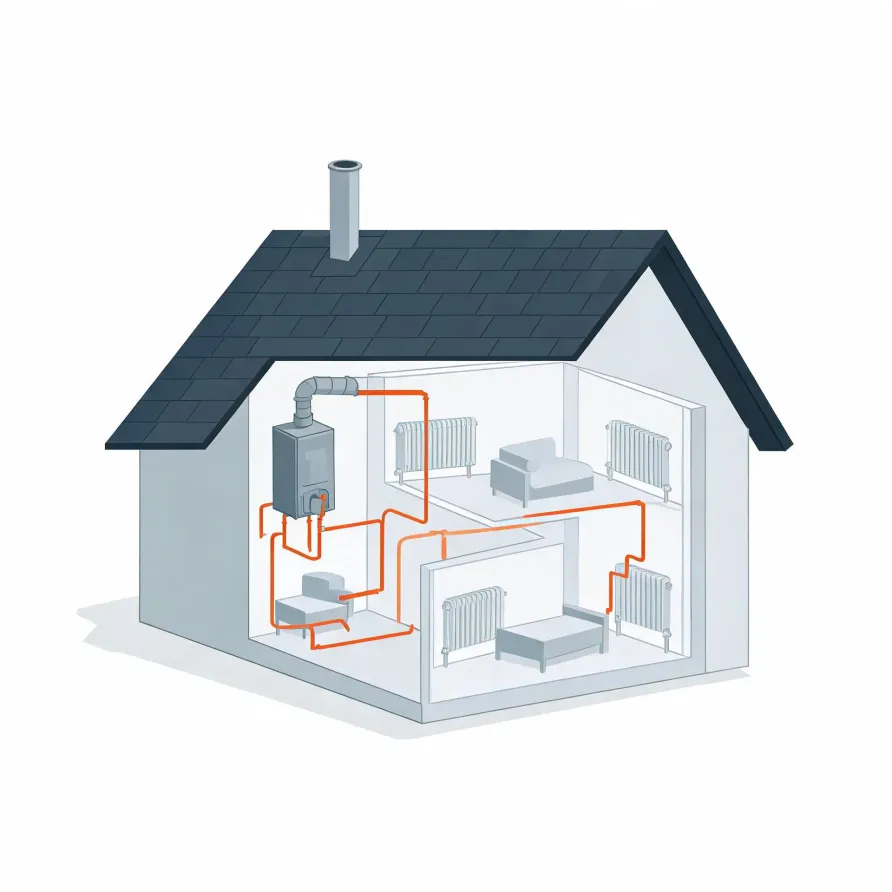
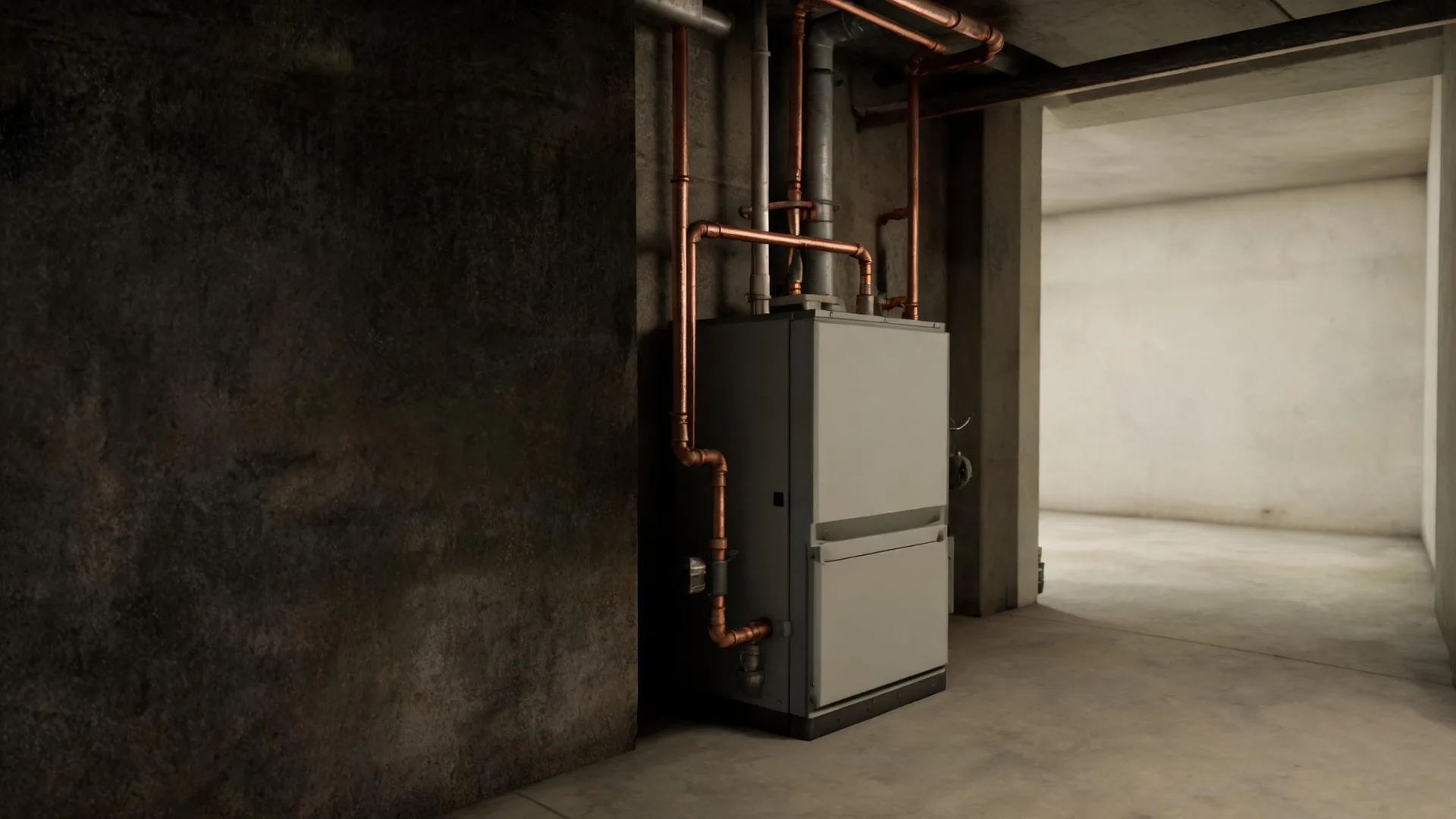
The boiler itself sits in a mechanical room, basement, or utility closet and is the unit a contractor physically sets in place first. It heats water that then moves through the system. The expansion tank mounts close to the boiler and absorbs pressure changes in the water as it heats and cools.
From the boiler, supply and return pipes run through the house to the heat emitters, which are radiators or baseboard units mounted along exterior walls or in rooms where the heat is needed. The circulator pump, mounted on the piping near the boiler, moves water through those loops. A pressure relief valve and an aquastat also attach to the boiler as part of the installation.
The drawing beside this text shows the general layout of a boiler system, and a licensed contractor determines exactly which components and pipe runs apply to your specific home.
Find a contractor in Teton CountyTeton County, Idaho, by the numbers
165 severe weather events were recorded in Teton County, Idaho between 2015 and 2024.
NOAA National Centers for Environmental Information, Storm Events Database, bulk CSV export, events 2015-01-01 through 2024-12-31.Half the homes in Teton County, Idaho were built in 2001 or earlier (2020-2024 ACS 5-year).
U.S. Census Bureau, 2020-2024 American Community Survey 5-Year EstimatesTeton County, Idaho holds 6,481 housing units (2020-2024 ACS 5-year).
U.S. Census Bureau, 2020-2024 American Community Survey 5-Year EstimatesOwners occupy 80.8% of the occupied homes in Teton County, Idaho (2020-2024 ACS 5-year).
U.S. Census Bureau, 2020-2024 American Community Survey 5-Year EstimatesBoiler Installation Rules for Teton County, Idaho1 sourced codes and standards
Licensing and Legal Requirements in Teton County, Idaho
Idaho requires a state certificate of competency for heating, ventilation and air conditioning work: it is unlawful to engage in the business, trade or practice without passing the examination and holding the certificate.
Weather Stress on Heating Equipment in Teton County
Boilers carry a workload tied directly to what the climate does outside. The number of severe weather events a county records shapes how hard that equipment runs and how soon those demands show up as wear.
165 severe weather events, 2015–2024. Source: NOAA National Centers for Environmental Information, Storm Events Database.