Tell us about the job
Takes about a minute. No obligation.
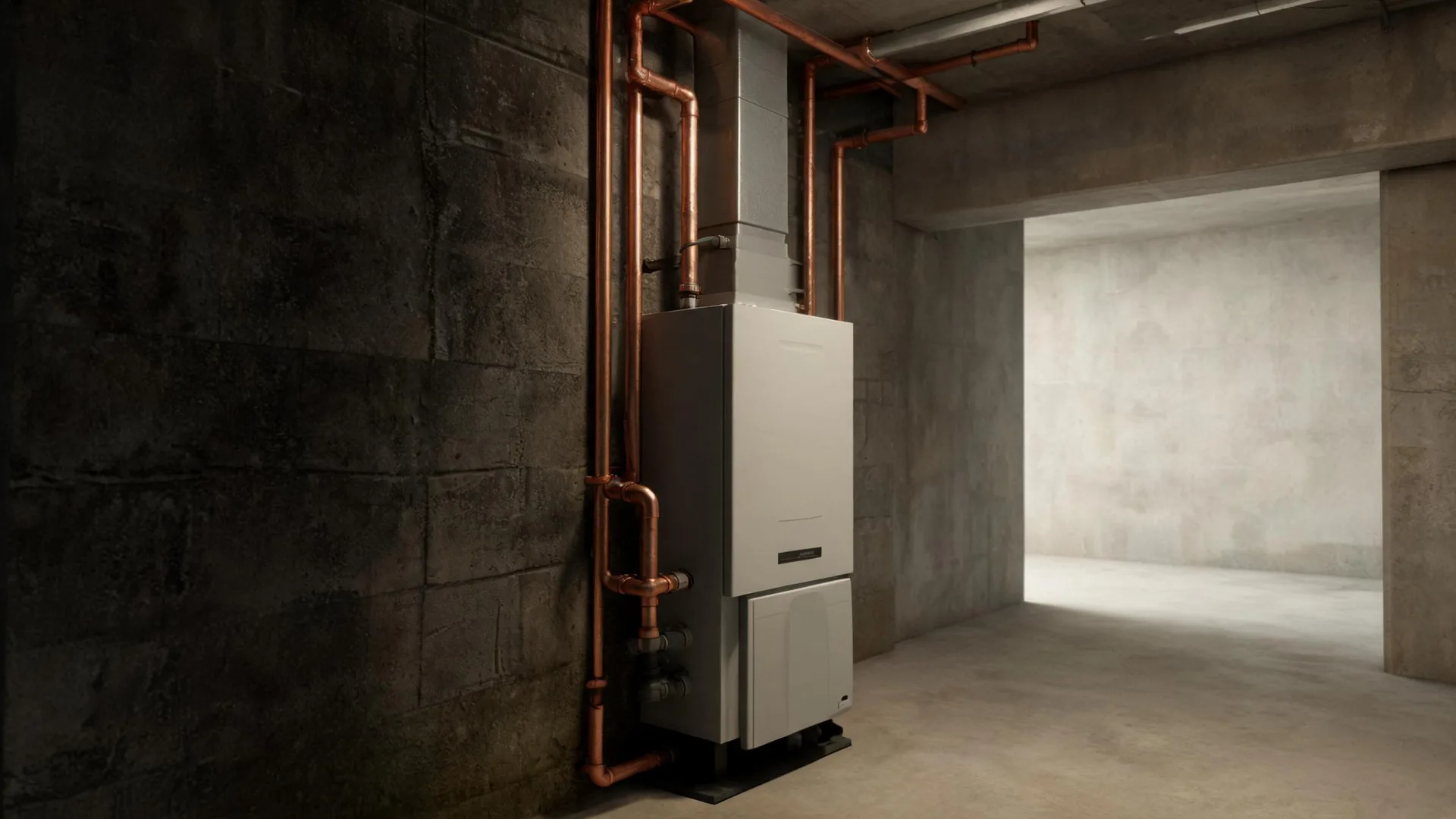
Size a boiler wrong for this house and the burner cycles harder and more often than it should, loading the heat exchanger and ignition system with wear that compounds across every firing. Homes in Kootenai County, ID run heat about ten months a year, from September through June. A contractor quoting a new boiler here has to run a proper load calculation before settling on equipment, because an undersized unit will short-cycle and an oversized one will too, and either error shows up in the components that fire and extinguish hundreds of times a season. The age on the nameplate tells a homeowner less than the installation record does.
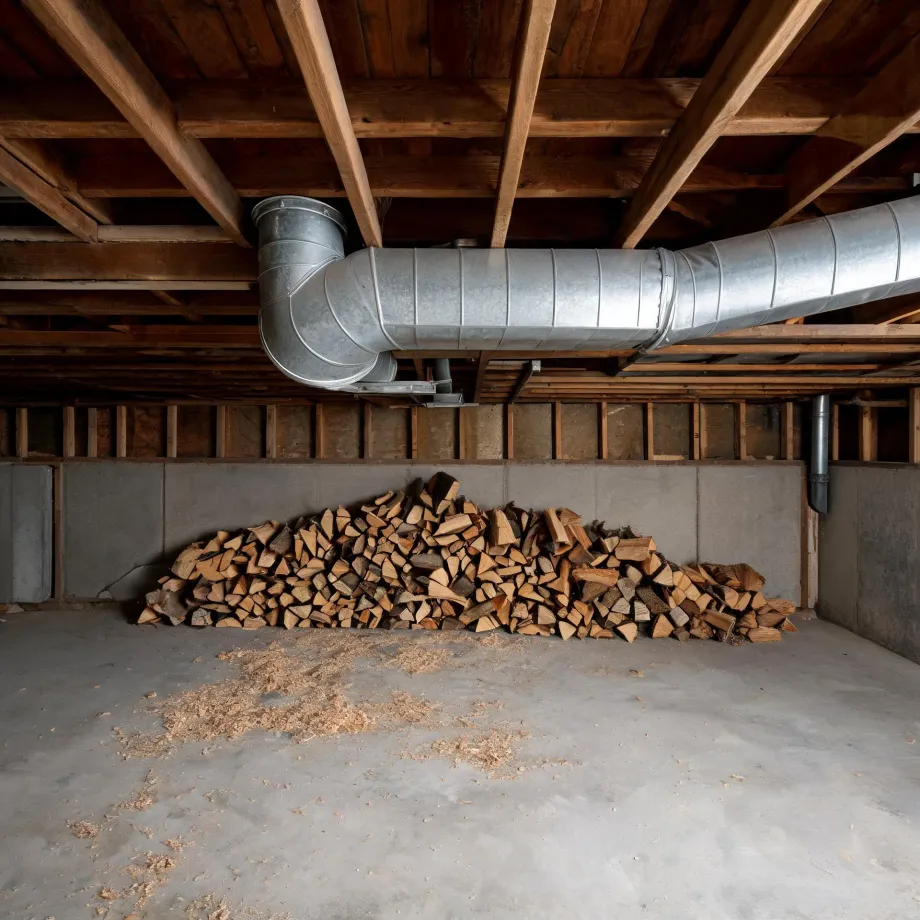
Ductwork laid down for one heating system and later asked to serve another is where a boiler installation either straightens out or gets complicated. Half the homes in Kootenai County, Idaho were built in 1996 or earlier (2020-2024 ACS 5-year). That spread across the housing stock means a contractor sizing a new boiler here is also reading the existing distribution system: whether the runs are sized right, whether the returns pull from the right places, whether the layout fits what the new unit will actually do. The electrical side is its own check. None of that is visible from the street, which is why the quote has to account for what the house already contains before the equipment gets priced.
What a New Boiler System Puts in Your Home
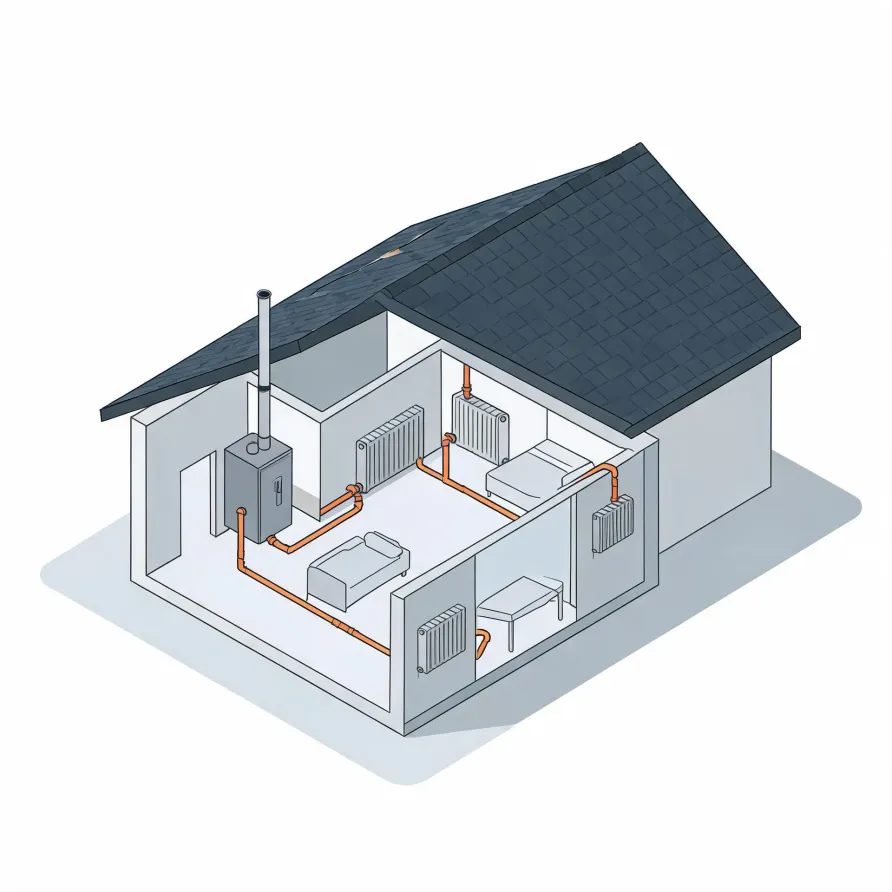
The boiler itself sits in a mechanical room, basement, or utility closet and is the unit that heats water and sends it through the house. Alongside it, the expansion tank absorbs pressure changes as water heats and cools, and the circulator pump moves hot water out through the pipes.
Radiators or radiant floor tubing sit at the far end of those pipes and release heat into each room. The thermostat mounts on a wall and tells the system when to fire. Zone valves, where the layout calls for them, direct water to specific areas of the house independently.
The drawing shows a typical boiler layout, and a licensed contractor determines exactly which components apply to your home and how they are configured.
Find a contractor in Kootenai CountyKootenai County, by the numbers
730 severe weather events were recorded in Kootenai County, Idaho between 2015 and 2024.
NOAA National Centers for Environmental Information, Storm Events Database, bulk CSV export, events 2015-01-01 through 2024-12-31.Half the homes in Kootenai County, Idaho were built in 1996 or earlier (2020-2024 ACS 5-year).
U.S. Census Bureau, 2020-2024 American Community Survey 5-Year EstimatesKootenai County, Idaho holds 80,260 housing units (2020-2024 ACS 5-year).
U.S. Census Bureau, 2020-2024 American Community Survey 5-Year EstimatesOwners occupy 71.3% of the occupied homes in Kootenai County, Idaho (2020-2024 ACS 5-year).
U.S. Census Bureau, 2020-2024 American Community Survey 5-Year EstimatesBoiler Installation Rules for Kootenai County, Idaho1 codes and standards
Licensing and Legal Requirements in Kootenai County, Idaho
Idaho requires a state certificate of competency for heating, ventilation and air conditioning work: it is unlawful to engage in the business, trade or practice without passing the examination and holding the certificate.
Severe Weather Events in Kootenai County
Kootenai County weather puts real demand on heating equipment, and a boiler sized or installed without accounting for local conditions will show it over time. That makes weather history a practical reference for any installation decision here.
730 severe weather events, 2015–2024. Source: NOAA National Centers for Environmental Information, Storm Events Database.