
Why your boiler makes a banging noise in Idaho

Step 1 of 3: Equipment

That banging is usually trapped water hitting steam or air pockets in the pipes or the boiler itself, a problem plumbers call kettling. Mineral scale builds up on the heating element or the bottom of the tank, and that scale traps water under it. The trapped water boils before the rest can circulate, and the steam bubbles collapse hard against the metal, which is what you hear as banging or popping. It gets worse over time because the scale layer keeps growing. Idaho's water running through the system year after year leaves mineral deposits behind, and a boiler that heats your home all winter builds up scale faster than one that barely runs. The noise itself won't damage much right away, but kettling means the heating element is working harder to push heat through that scale, and left alone it can crack the heat exchanger. A contractor can flush the system and check how much scale has built up before it gets to that point.

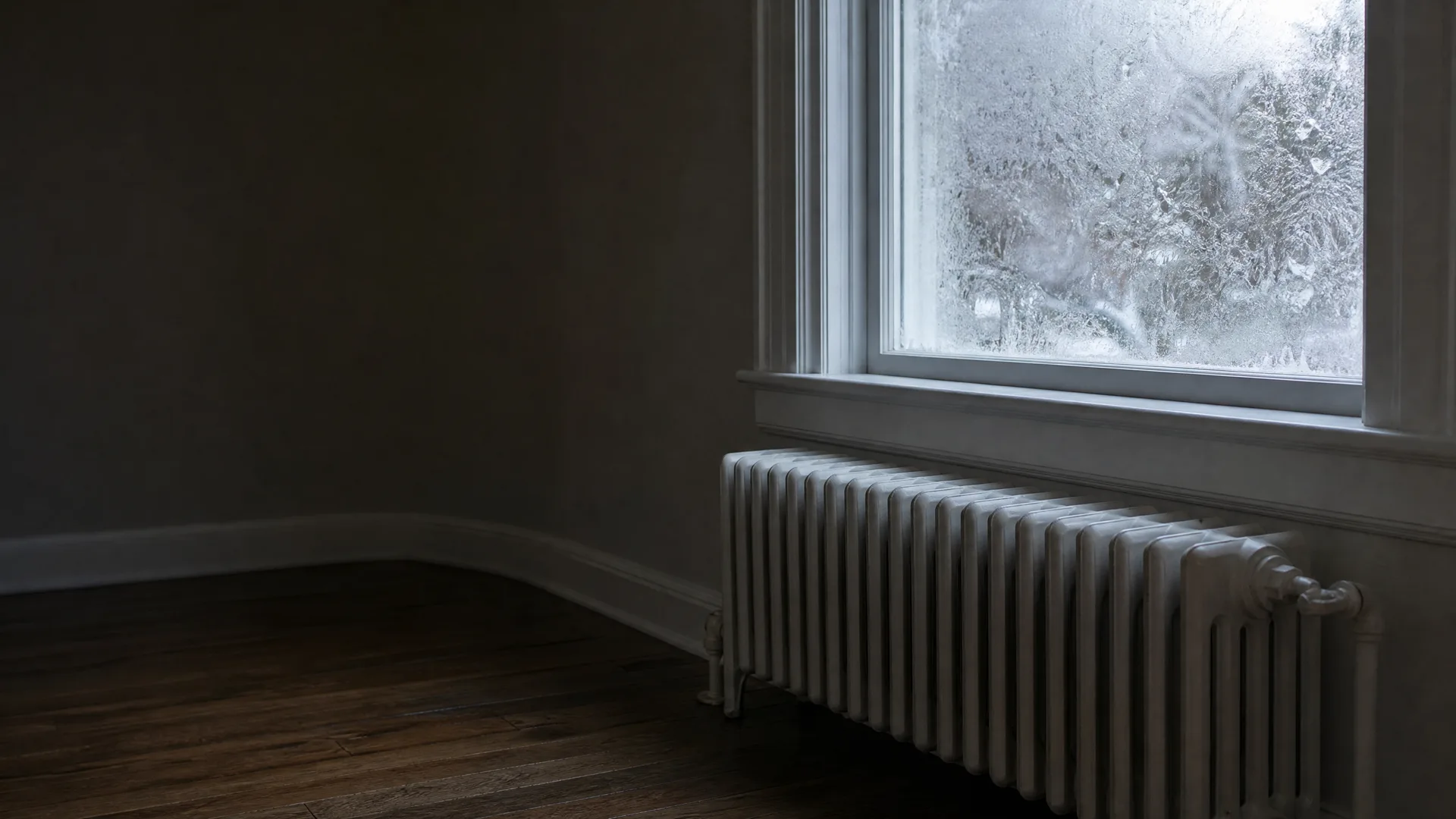
A white cast-iron column radiator under a frosted window in a dim empty room with dark walls and a wood floor, with snowy trees visible outside.

You're up before the sun, coffee going, and the radiator under the living room window starts up again. Three sharp bangs, then a pause, then a fourth. The glass has ice on the inside of it, that thin kind that forms when it's been thatcold overnight. You put your hand on the cast iron and it's hot at the bottom, barely warm at the top. The noise stops when the room finally warms through, like it does most mornings this time of year, and you go on with getting ready, used to it by now but still bothered by it.

Flush It or Fix the Part

Flush and clean

  • A contractor drains the boiler and flushes the loop to clear the scale sitting on the heating element or the bottom of the tank.
  • This is the right call if the banging started gradually and the boiler still heats the house evenly, with no cold spots in any room.
  • It costs less than replacing parts because the boiler itself is sound, the noise is just scale getting between the water and the metal.
  • Idaho's water is often hard enough to leave mineral deposits over a few winters, and a flush is the standard fix for that buildup.
  • Once the scale is gone, the water heats evenly again and the trapped pockets that cause the banging stop forming.
  • A flush doesn't fix a cracked heat exchanger or a failing circulator pump, so if those are the real problem the noise comes back.

Replace parts or the unit

  • If the banging comes with rust-colored water, a leak at the base, or heat that's uneven room to room, scale usually isn't the only issue.
  • A circulator pump that's worn or a heat exchanger that's cracked will keep making noise no matter how clean the water is.
  • Boilers that have run for many winters develop scale faster each year, so a flush that worked once may not hold the second or third time.
  • Replacing a pump or valve costs less than replacing the boiler, and a contractor can tell you which parts are actually failing before you decide.
  • A full replacement makes sense once the unit is old enough that several parts are wearing out at the same time, not just one.
  • Winters here get cold enough that a boiler working harder than it should wastes more gas keeping the house warm.
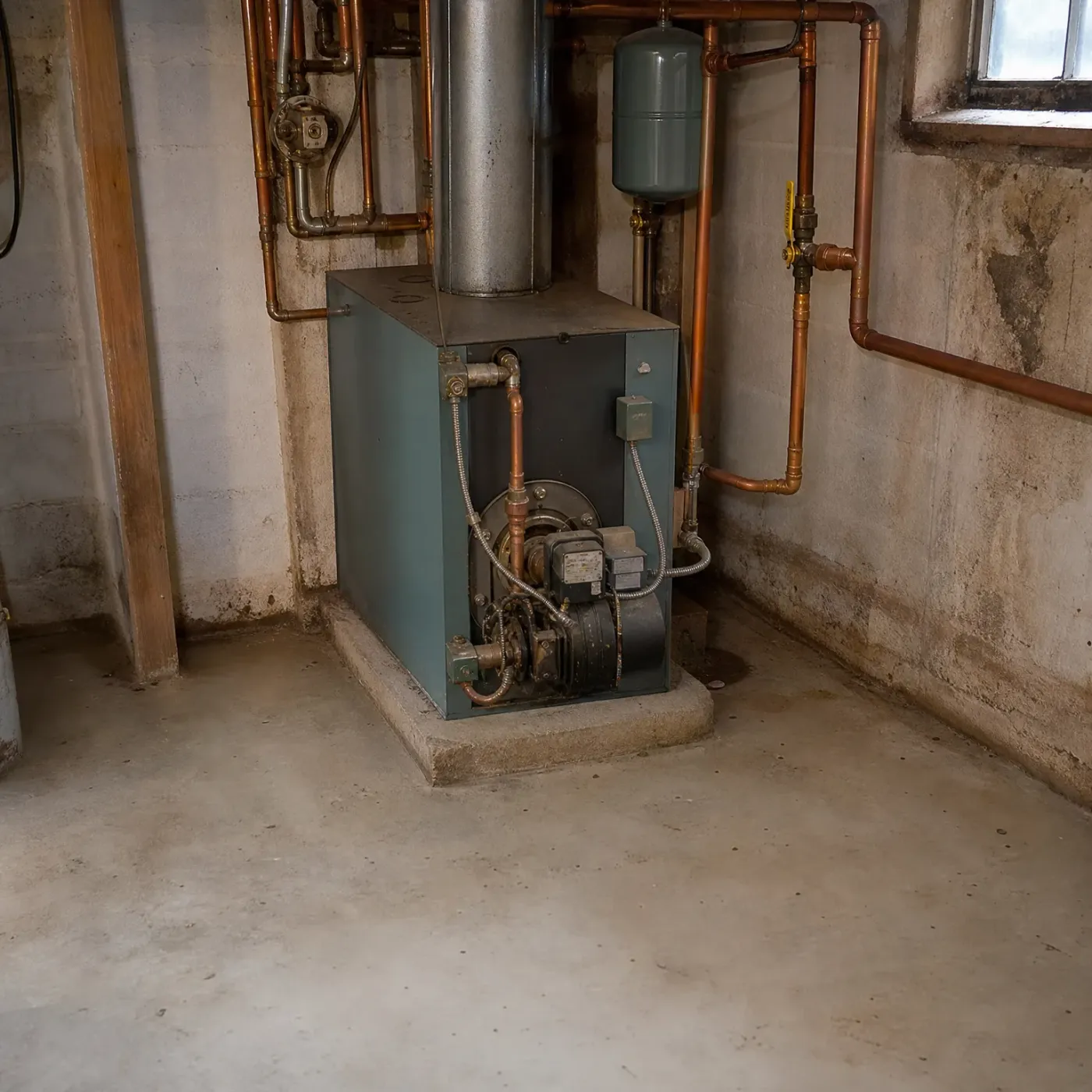
A gray boiler unit on a concrete pad in a basement corner, connected to copper piping, valves and a metal flue against painted concrete block walls.

Running quiet

This is what a boiler sounds like once the scale is out and the loop is full and bled. Water moves through the copper and the expansion tank holds its charge. No bangs when it fires at 2 a.m., just the burner and then quiet heat into the radiators.


A blue oil-fired boiler with a burner unit sits on a concrete pad in a basement corner, with copper piping, valves and a gray expansion tank overhead against concrete block walls.

Banging under load

Scale has built up on the heating element or the bottom of the tank, and water gets trapped under it. That trapped water flashes to steam when the burner fires, and the steam collapses against the cold iron with a bang. It gets louder as the scale thickens.

A smiling woman with dark shoulder-length hair in a cream V-neck sweater sits at a marble counter with a glass of red wine, with a kitchen and softly lit living room behind her.
A woman in a dark green sweater laughs while seated at a marble kitchen island with a glass of red wine, with open shelving, cabinets and a living room visible behind her.
A woman with long dark hair in a cream knit sweater laughs while looking off to the side, seated at a counter with a glass of red wine, in a dimly lit living room with a sofa, lamp, framed pictures and houseplant behind her.
A smiling woman with long dark hair in a beige sweater sits at a marble kitchen counter with a glass of red wine, with a dimly lit living room behind her.

Why hard water makes it worse

Idaho's well and municipal water tends to run hard, and hard water leaves scale behind faster than soft water does. Every time the boiler heats, a little more mineral comes out of the water and settles on the heating element or the bottom of the tank. That layer insulates the metal from the water above it, so the water right against the metal gets hotter than the rest and flashes to steam. The bang is that steam pocket collapsing. The harder the water, the sooner the scale builds up enough to start the noise.

Why it shows up in cold snaps

A boiler works harder to keep the house warm when it's below freezing outside than it does in milder weather, which means more heat is going into the tank and more cycles each day. Scale that sat quiet during a mild stretch starts trapping steam once the burner is running longer and firing more often. That's why the banging can seem to start out of nowhere on the coldest mornings. The scale was already there. The cold just pushed the boiler hard enough to make it loud.

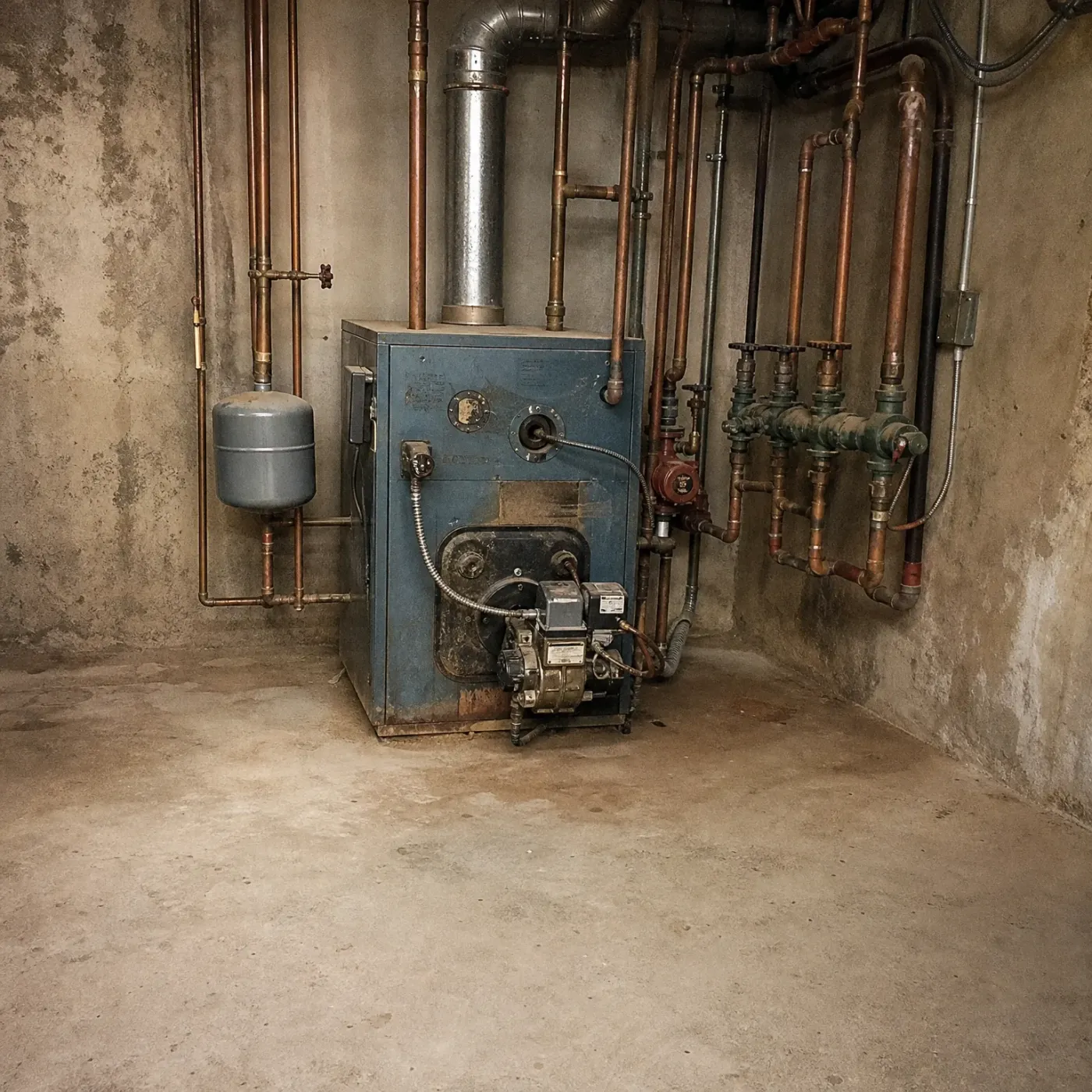
An older blue boiler with a burner unit stands in a concrete basement corner, connected to copper and steel piping, valves and a gray expansion tank on the wall.
Before you get your boiler repair
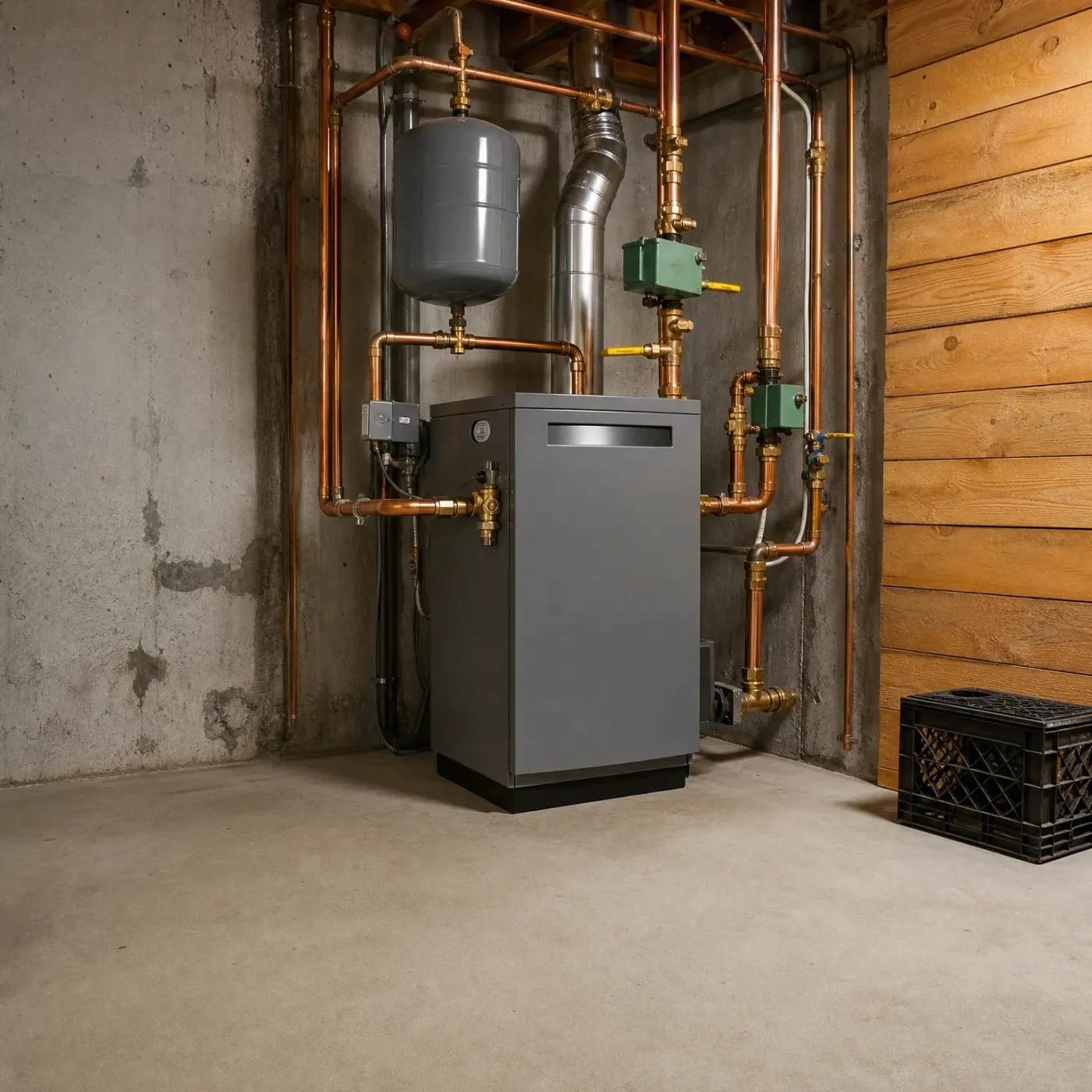
A gray boiler unit in a basement corner with copper piping, brass valves, a gray expansion tank, a metal flue duct, concrete walls and a wood-paneled wall, with a black plastic crate on the floor at right.
After you get your boiler repair

Leave it alone

A boiler that bangs once or twice a winter, on the coldest mornings, and runs quiet the rest of the time isn't in trouble yet. Some scale on the heating element is normal, and a little noise when the system works hardest doesn't mean it's failing. If the bill hasn't moved and the radiators still heat evenly room to room, the boiler is doing its job. You can wait and watch it through the rest of winter. Write down when it bangs and how often, since that pattern is what a contractor will ask about if it does get worse. Waiting costs you nothing except the noise itself.

Get it looked at

A boiler that bangs every time it fires, or bangs louder than it did last month, has scale building faster than it's wearing off. Left alone, that scale keeps insulating the heating element from the water around it, and the element works harder to do the same heating. On well water especially, that buildup doesn't slow down on its own. A contractor who works on boilers all winter in this state has flushed this exact problem more times than you have had the boiler. One visit, one diagnosis, and you know whether it's a flush or something more, instead of guessing every morning the radiator knocks.

A smiling bearded man in a navy crewneck sweater sits at a dinner table with a glass of red wine, plates and glasses in the foreground, in a dimly lit room with a lamp and framed picture behind him.
A woman in a dark gray sweater reclines on a light sofa with eyes closed and a slight smile, under a textured gray blanket with an open book resting on her lap, with a lit table lamp and plant in the background.

Skip calling around

The pro who reaches out is licensed in Idaho.

No charge to send it. You decide if you hire them.

What's actually happening inside

  • Cold water enters the boiler denser than the hot water already circulating, and the two don't mix right away.
  • A steam or air pocket gets trapped under a layer of scale and collapses suddenly when surrounding water cools it.
  • That collapse is what plumbers call kettling, and the bang is the sound of the pocket imploding, not the pipe cracking.
  • Banging often shows up loudest on the coldest mornings because the burner is firing longer and harder to catch up.
  • Pipes that run through unheated space can also knock from expansion as the metal heats and moves against a joist or strap.
  • A low water level in the boiler lets the heating element run dry in spots, which causes a sharper, more frequent knock.

The bang isn't the pipe failing. It's water and steam moving in ways they shouldn't. Cold water coming back into the boiler is heavier than the hot water already moving through the loop, and for a moment they sit in layers instead of blending. Underneath a layer of scale, a small pocket of steam or trapped air forms, cut off from the water around it. When cooler water finally reaches that pocket, it collapses fast, and the sound of that collapse is the bang you hear. Plumbers call this kettling, the same word for what happens in an old kettle with scale built up on the bottom.

This is why the noise gets worse on the coldest mornings. The burner has to run longer to bring the house back up to temperature, so there's more time for cold water to cycle through and hit those trapped pockets. It isn't that the boiler is working harder in some abstract sense. It's running longer, and that longer run gives the scale and the water more chances to clash.

Not every knock comes from inside the boiler. Pipes running through an unheated crawlspace or attic expand as hot water moves through them, and if a pipe is resting against a joist or a metal strap, that expansion shows up as a knock or a tick as the metal shifts. A boiler running low on water adds another version of the same problem, letting the heating element run dry in spots and knock more often, and more sharply, than scale alone.

Winter nights average 22°F statewide

At 22°F overnight, your boiler is firing on and off most of the night to hold the house, and every cycle pushes more hot water past that scale. That's more chances for a pocket to form and collapse, which is why the banging often starts closer to dawn, when the water's been cycling the longest.

NOAA nClimDiv 1991-2020 county normals weighted by homes

  1. The burner fires and heats water inside the boiler.

  2. Scale on the heating element insulates a thin layer of water.

  3. That trapped water flashes to steam before it can mix.

  4. A steam pocket forms underneath the layer of scale.

What you're hearing when the boiler bangs at night

You hear it most on the coldest mornings, when the burner is cycling on and off trying to keep up. Three or four bangs from somewhere behind the wall or under the floor, then quiet, then it starts again next time the burner fires. Some homes notice a faint metallic knock that travels through the pipes to a radiator upstairs. If you let it go, the scale causing it keeps building, and the heating element has to work through more of it each winter to get the same heat into the room. Eventually that means higher gas bills before it means a real breakdown, but a boiler that's banging is already working harder than it should.

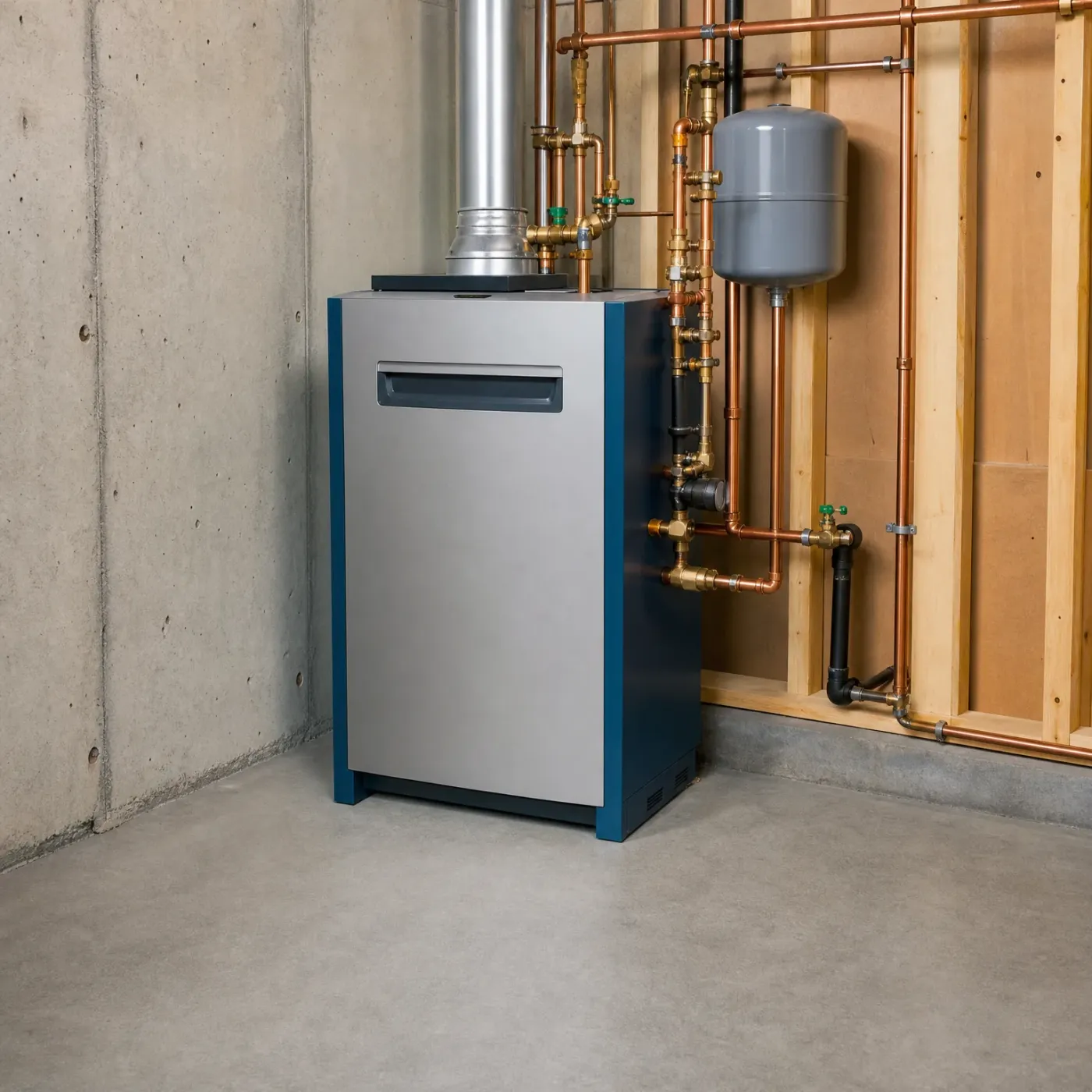
A gray and blue floor-standing boiler in a basement corner, with a metal flue pipe and copper and black piping, valves, and a gray expansion tank mounted on an unfinished wood-framed wall beside a concrete wall.
A boiler with a clean loop and no scale buildup moves water quietly through the copper and into the expansion tank.
A green oil-fired boiler with a flue pipe, burner and circulator pumps sits on a concrete pad in a basement corner, surrounded by copper piping and an expansion tank against concrete walls.
A boiler left to run with scale on the heating element is doing the same job while the banging gets worse underneath it.
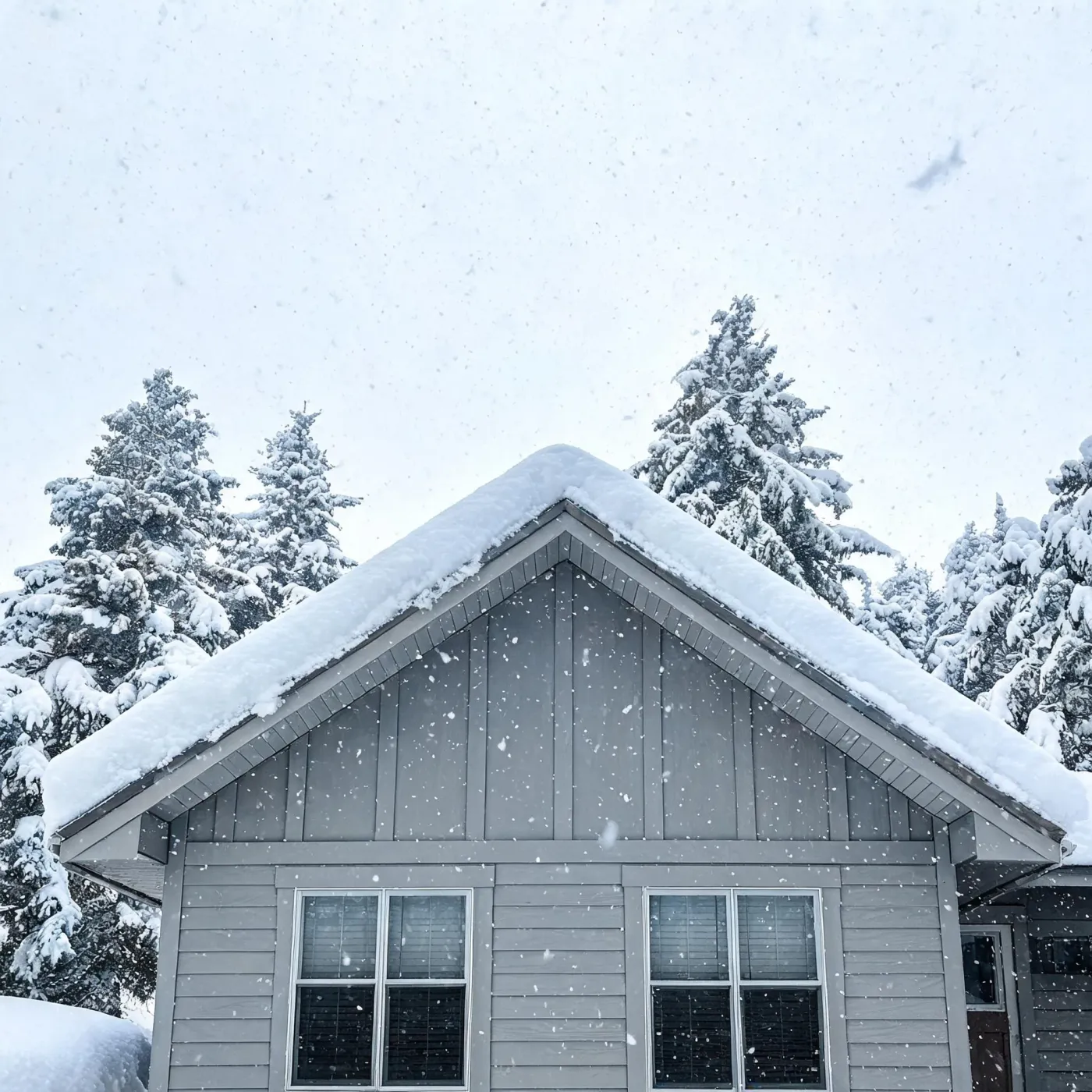
A gray-sided house with a steep gable roof covered in thick snow, framed by snow-laden conifers under a pale sky with falling snowflakes.

The National Weather Service puts Idaho's winter nights at an average of 22°F. At that temperature, your boiler isn't cycling once or twice overnight, it's firing again and again to keep the house from losing ground. Each time it does, more scale-trapped water gets pushed past the heating element, and more pockets form underneath it. That's why the banging tends to show up closer to morning rather than right when the burner first kicks on at bedtime. You've probably noticed it that way already, quiet at first, then three or four bangs sometime before the sun's up. The cold itself isn't the problem. It's what the cold makes the boiler do, over and over, through the night.

NOAA nClimDiv 1991-2020 county normals weighted by homes

A closed silver laptop and a ceramic mug of dark coffee sit on a wooden table in front of two chair backs, with a kitchen counter, tiled backsplash, wooden cutting boards, a vase of greenery and a potted plant by a window behind.

The banging is scale, and it gets worse until someone flushes it

The noise under the floor is trapped water hitting pockets of steam or air, caused by scale sitting on the heating element or the bottom of the tank. It gets louder as the scale builds, and it won't fix itself. A contractor flushes the loop, clears the scale, and the banging stops.

Finding that contractor is usually its own chore. You'd be searching listings, calling a few, telling each one about the ice on the window and the three bangs before dawn, then waiting on quotes to compare. A local plumber who works on boilers all winter has already heard this exact pattern from other houses on hard water, and knows what the flush needs to fix. One call gets you to that person directly, not a list of strangers bidding on the job.

Interior corner of a room with a window and sheer curtain at left, a gray upholstered sofa with a cushion at right, and a round wooden table holding stacked books and a round vase with an olive branch.
A covered porch with a wood front door with six upper glass panes, a lantern wall sconce, tapered column on a stone base, potted ferns and flowers, a woven doormat, and wide steps leading to a paver walkway bordered by shrubs and white hydrangeas.
A beige upholstered sofa with a cream cushion and chunky knit throw sits beside a white-framed window, with a leafy potted plant in a stone vase against a tan wall.
Sunlit corner of a room with a linen curtain beside a window, built-in shelves holding ceramic vases, wooden bowls, a potted green plant, stacked books and a woven basket, above a textured rug.
A dark wood three-drawer dresser against a pale wall holds a tall ceramic vase with leafy branches, stacked books and a shallow bowl, with a framed print above, a woven basket on the wood floor at left, and an upholstered sofa with a green pillow in the foreground.
A cream upholstered sofa with a textured ivory cushion and a rust-colored cushion sits beside a window with sheer linen curtains, with a potted leafy plant behind it and a wooden bowl on a wood table in the foreground.

Describe it once

Only one pro gets your request, so you hear from one company.

Start one form

There's no charge for the request.