Profile view of a bearded man wearing a black baseball cap and a dark gray T-shirt against a plain light background.

What size boiler an Idaho home needs

Step 1 of 3: Equipment

What size boiler do I need for my house in Idaho?

You're replacing a boiler, or sizing one for the first time, and you want a straight number before a contractor shows up. Idaho winters put real demand on a heating system, and guessing wrong either costs you comfort or costs you money on a unit that's bigger than your house will ever need.

The right size comes from a heat loss calculation, not your home's square footage

A contractor figures this out by calculating how much heat your house actually loses on the coldest nights, using your walls, windows, insulation and layout, not a flat number per square foot. Two houses the same size in the same Idaho town can need different boilers if one has more windows or less insulation. An oversized boiler cycles on and off too often and wears out faster. An undersized one runs constantly and still can't keep the house warm when it's coldest outside. Gas is the common fuel for boilers here, and the right size keeps that gas use in line with what the house really needs instead of paying for capacity that sits unused most of the year.

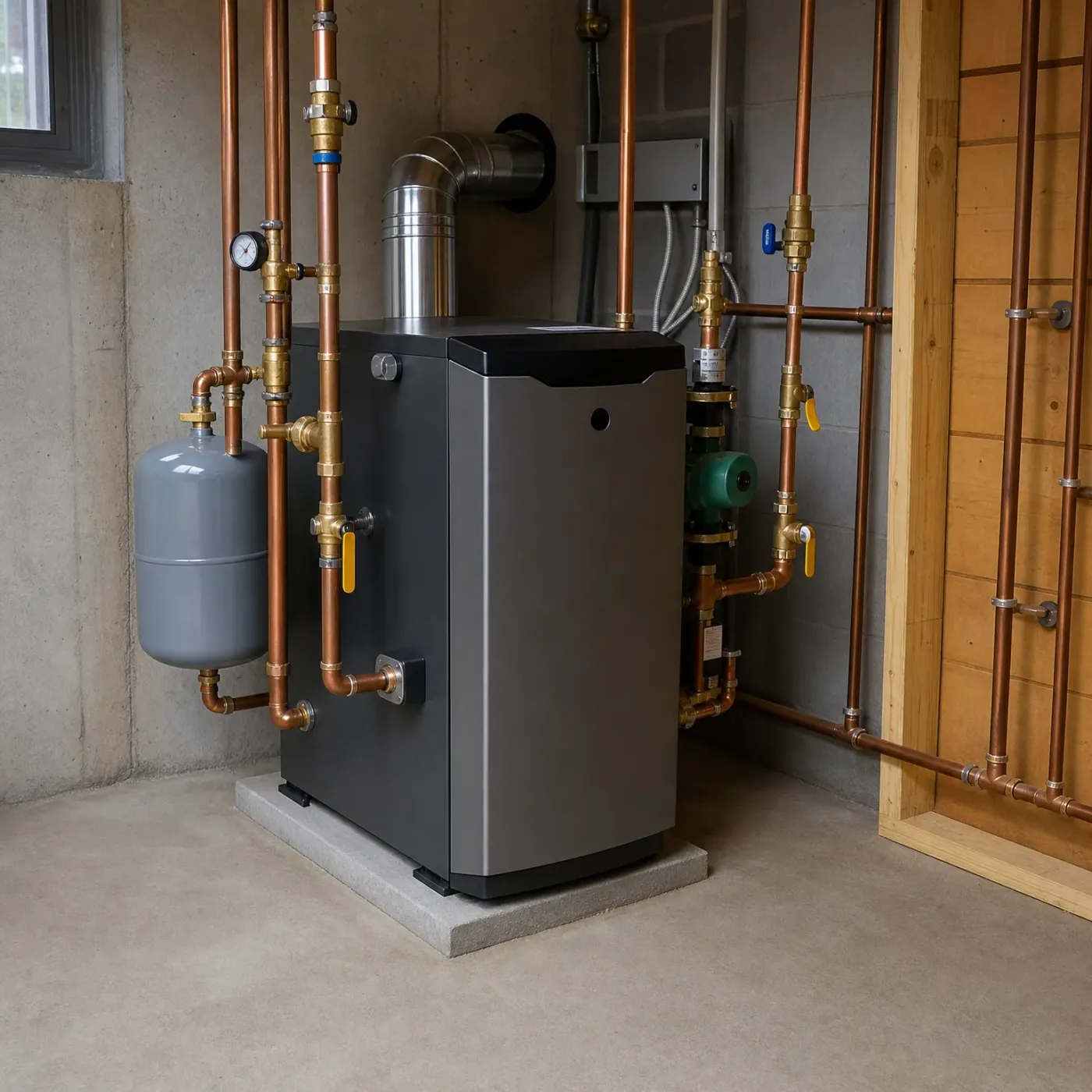
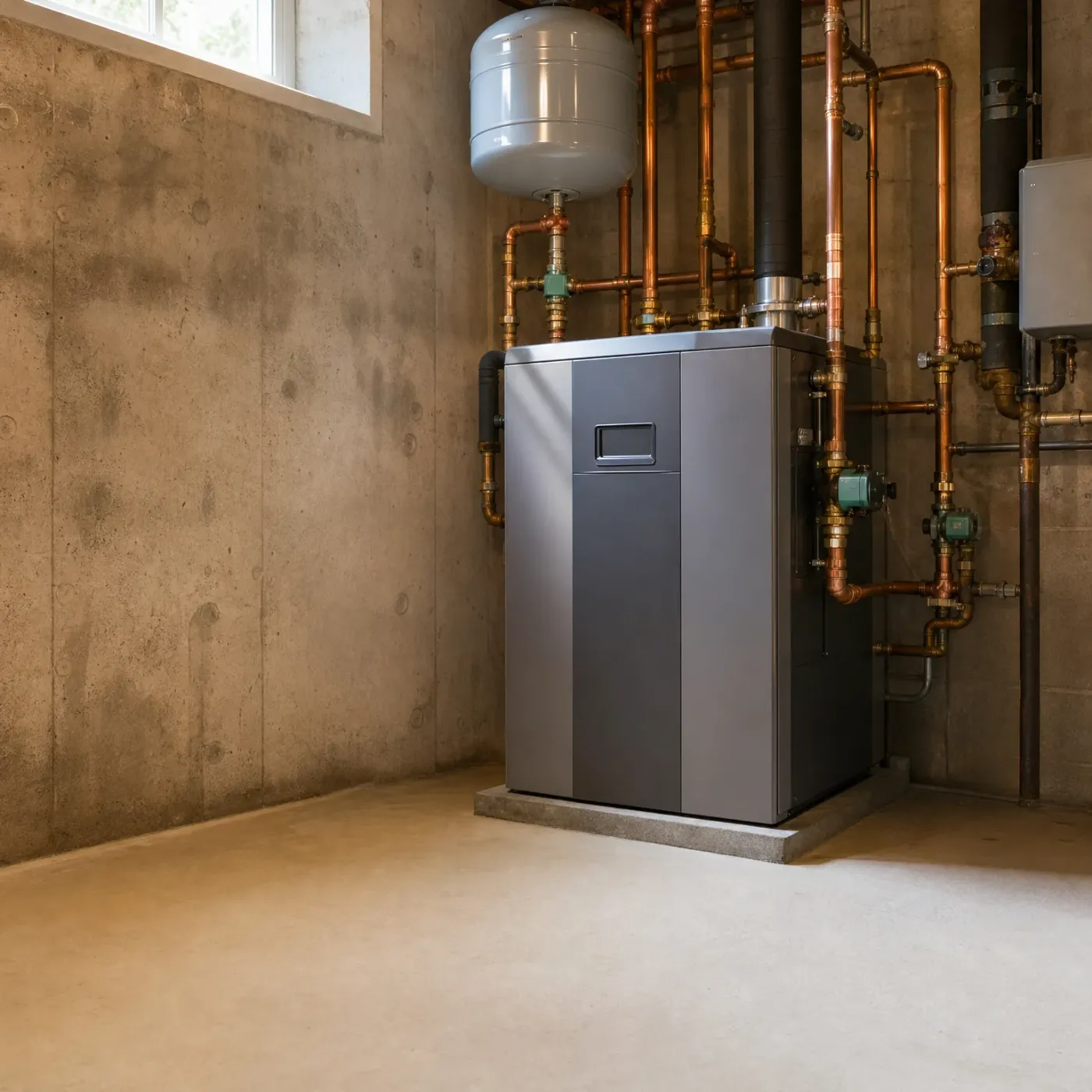
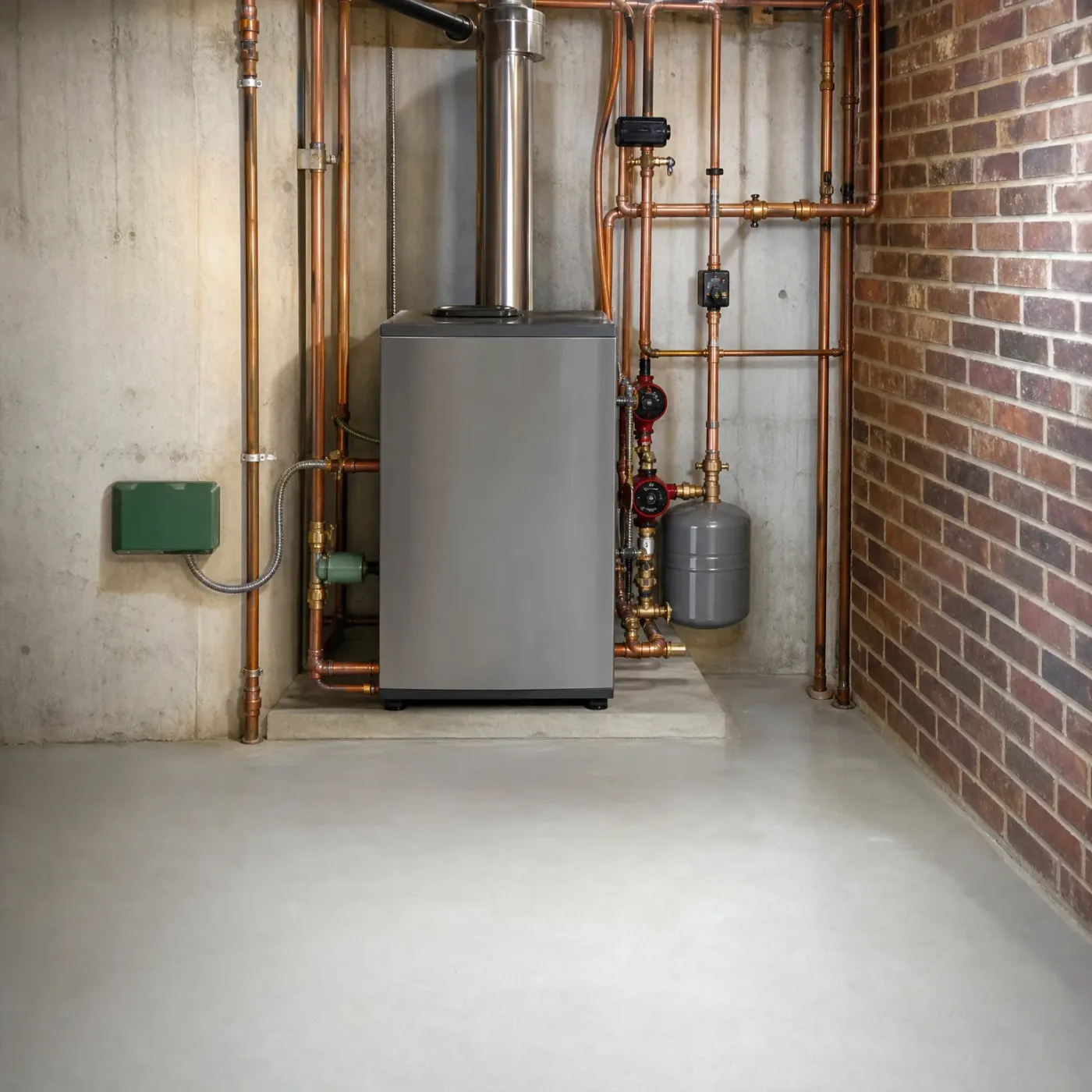
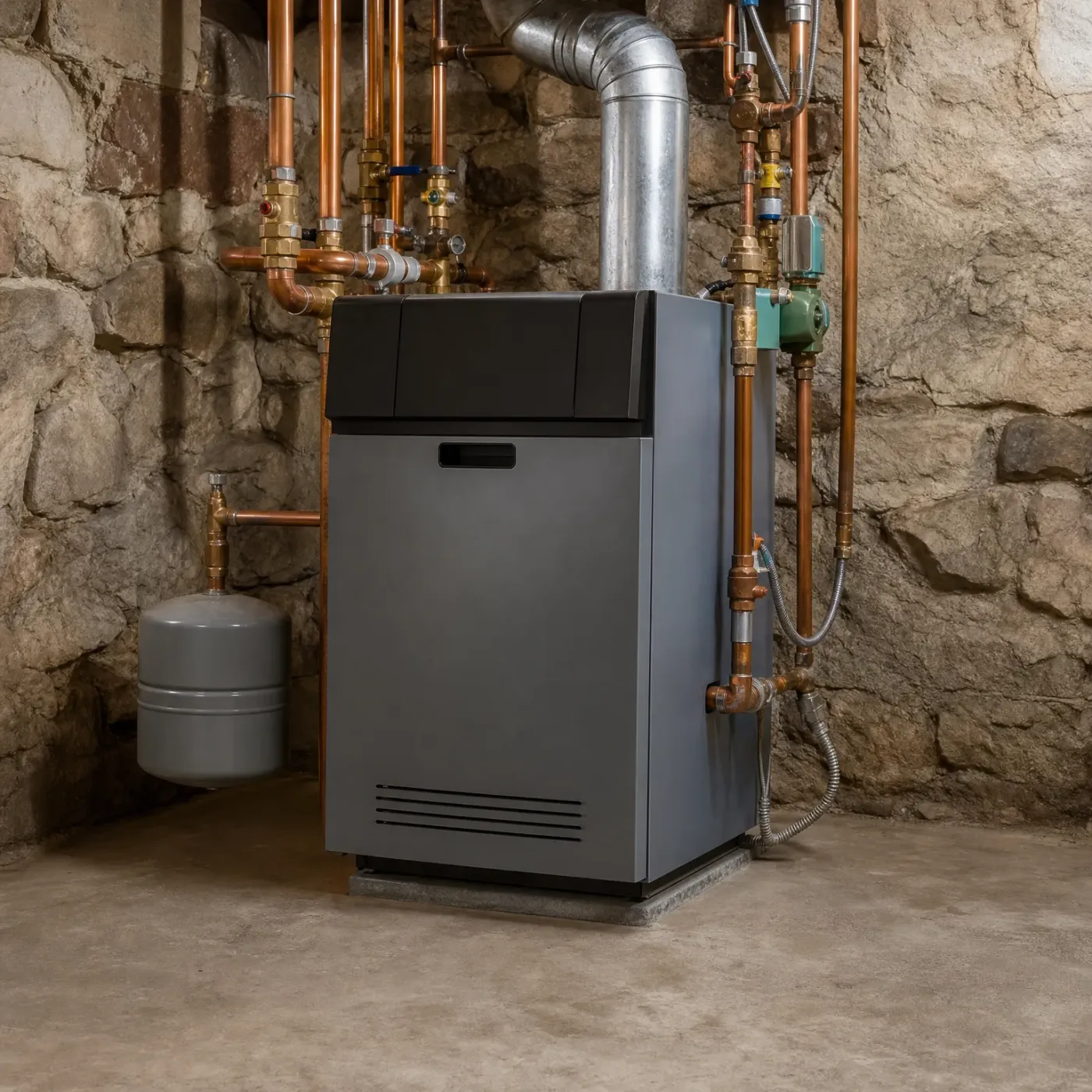
A gray residential boiler on a concrete pad in a basement with stone walls, connected to copper piping, brass valves, a circulator pump, an expansion tank, and a metal flue duct.

Sized right, running steady

A boiler that matches your house holds a steady pace through the coldest nights. The pipes, valves and circulation pump move hot water at a rate the unit was built for, and the expansion tank keeps pressure even. Nothing strains.
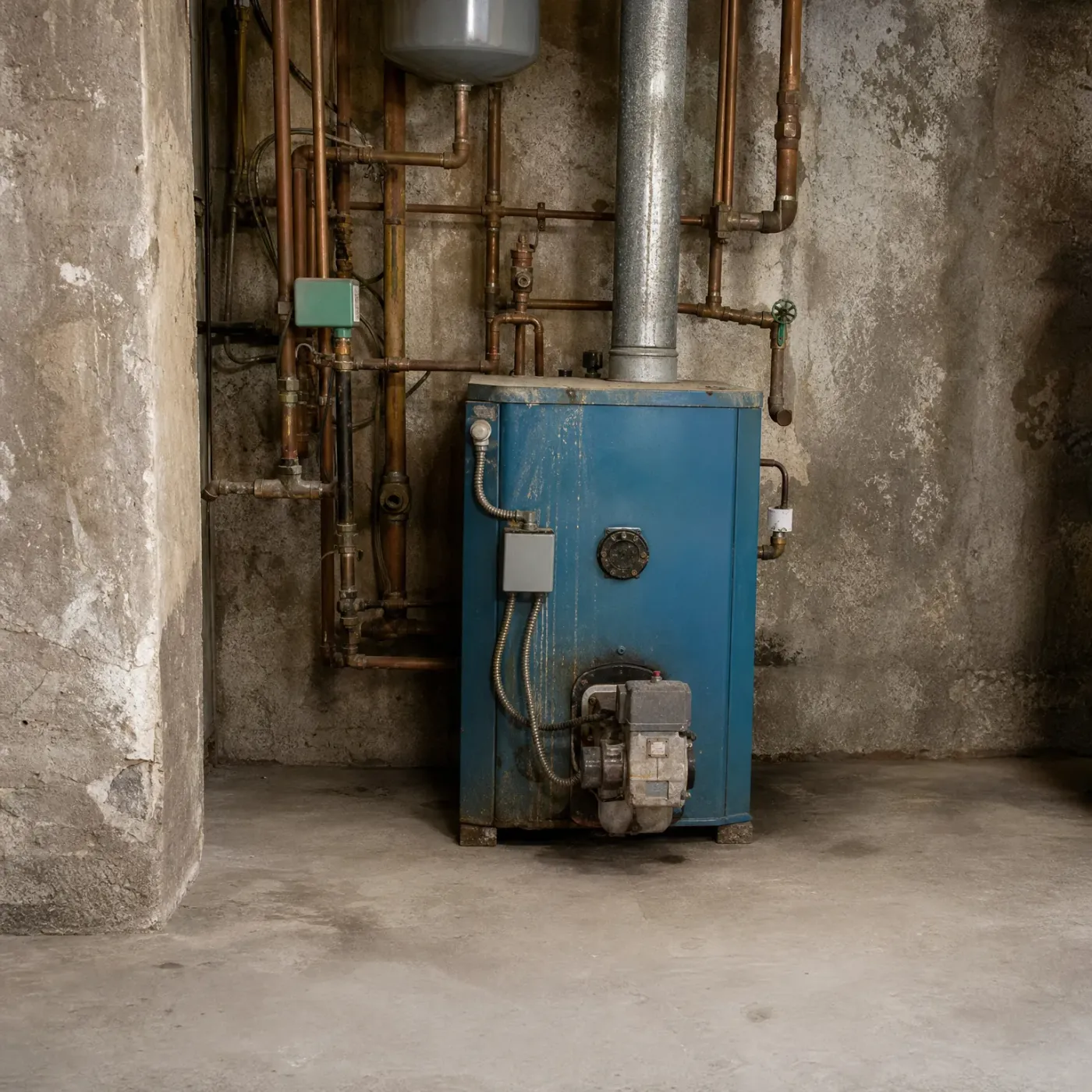

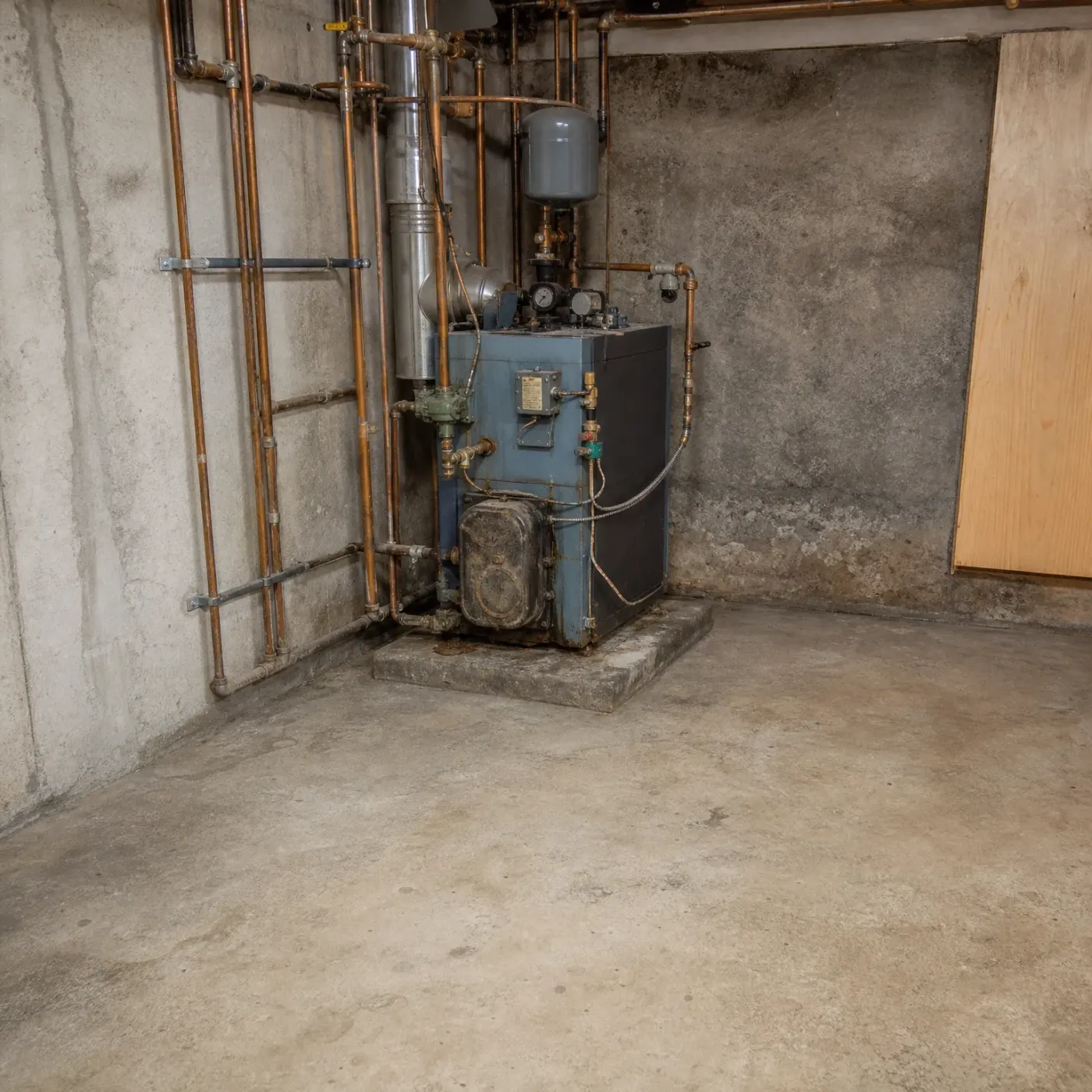
A blue cabinet boiler with a metal flue pipe and copper piping stands against a bare concrete wall in a basement with a concrete floor.

Sized wrong, working against itself

An undersized boiler runs flat out and still falls behind when it's cold outside. An oversized one cycles on and off all night, which wears the burner and the parts around it faster than steady use would. Either way, the house feels the difference before you do.

A smiling man in a dark navy sweater sits on a light sofa in a living room, with a glass bowl of popcorn on a wooden coffee table and bookshelves behind him.
A smiling man in a dark green sweater sits on a tan leather sofa in a dimly lit living room, with a bowl of popcorn in the foreground and a kitchen area blurred behind him.
A smiling middle-aged man in a dark shirt sits on a gray sofa in a living room, with a bowl of popcorn on a side table and shelves, a window and kitchen area behind him.
A smiling bearded man in a dark gray t-shirt sits on a gray couch in a living room, with a large glass bowl of popcorn on a wooden table in the foreground.

Why does your boiler run so much, or so little?

A boiler that's too big for your house short cycles. It fires, heats the water fast, shuts off, then fires again twenty minutes later, all night long. You'll hear it kick on more than seems right, and some rooms may run warm while others lag. A boiler that's too small runs almost constantly once the temperature drops and still struggles to keep the house where you set the thermostat. Either way, the wear falls on the same parts, the igniter and the circulation pump taking the brunt of all that extra cycling. Over a few winters that shortens the life of a unit that should last decades.

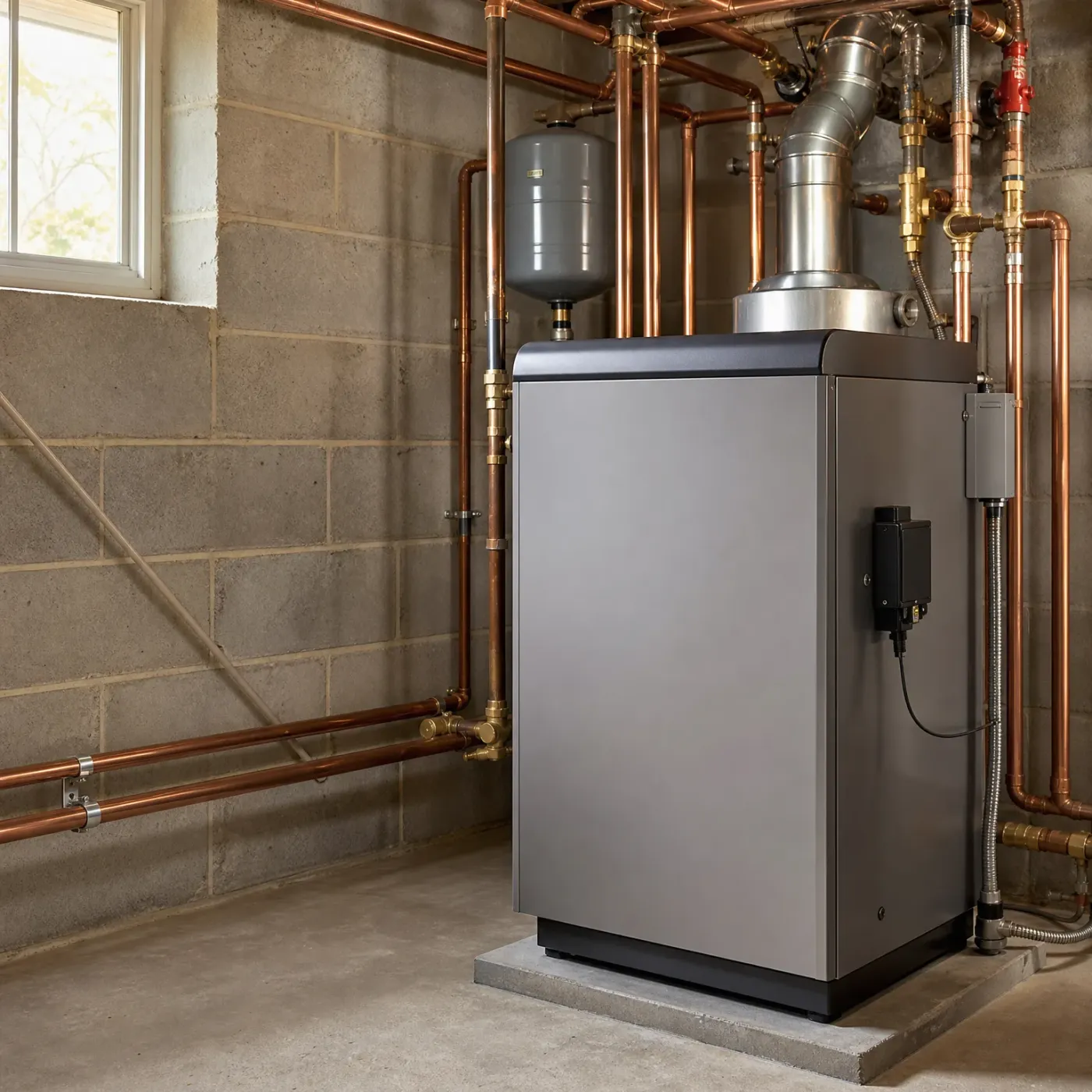
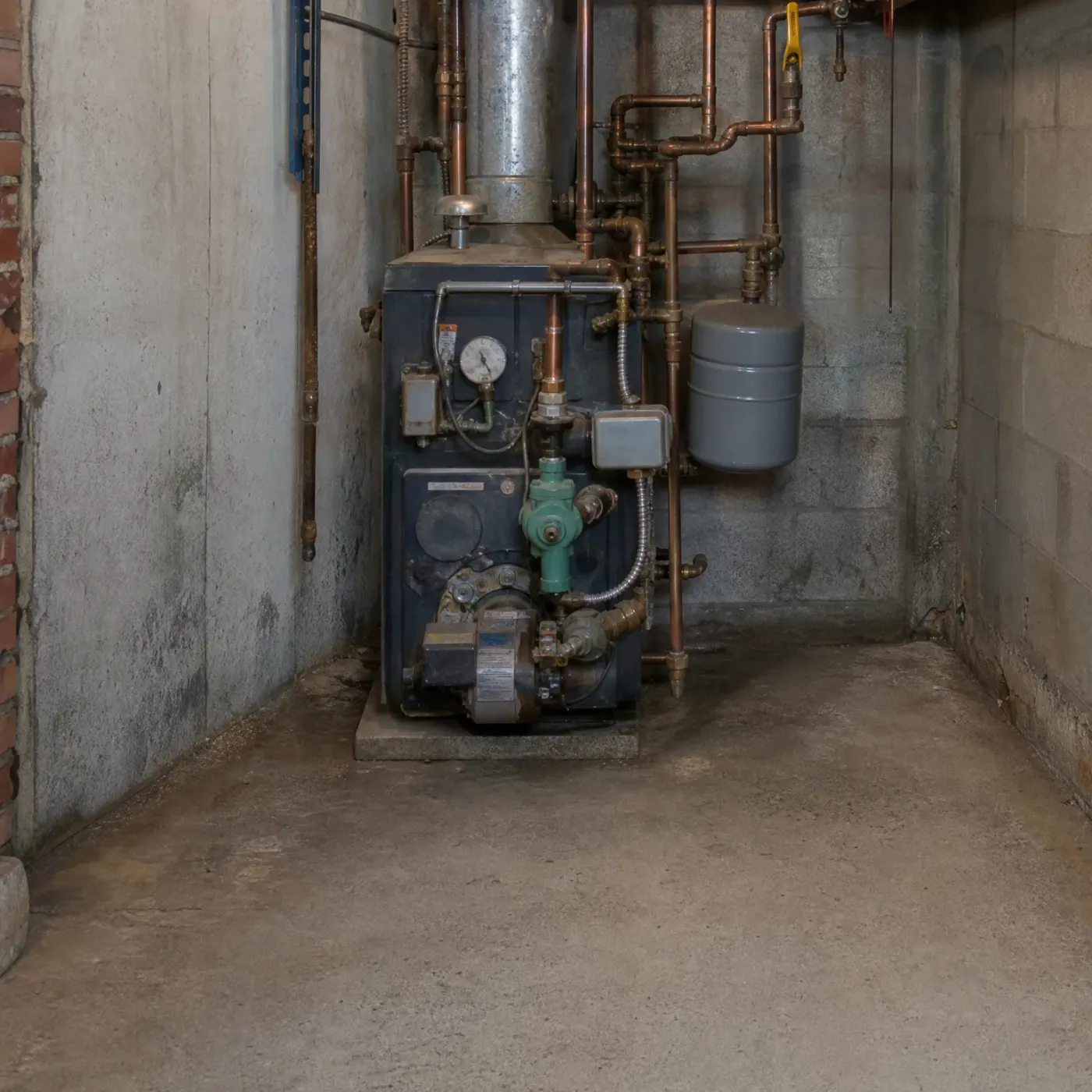
A dark gray floor-standing boiler on a concrete pad in a basement, surrounded by copper piping, brass valves, a gray expansion tank, a circulator pump, and a metal flue pipe against concrete block walls.

Right size, correct install

This is what a correctly sized boiler looks like installed: the piping laid out clean, the expansion tank and circulation pump matched to the load, valves and gauges where a contractor can read them fast. A unit like this was sized to your house, not guessed at.

A blue boiler on a raised concrete pad in a basement corner, with copper and steel pipes, a gauge cluster, an expansion tank, and a metal flue running up the bare concrete walls.

Wrong size, old install

An old boiler crammed into a bare concrete room, oversized or undersized for the house it's in, with no clear way to check its work. If this is closer to what's in your basement, that's reason enough to get the size right when it's replaced.

Right Size or Just a Guess

Getting it sized right

  • A load calculation looks at your square footage, your windows, your insulation and the coldest nights your area sees before landing on a number.
  • The contractor measures radiators or baseboard length to match output to what's actually installed in the house.
  • A properly sized unit cycles on, holds a steady burn, and shuts off, rather than firing in short bursts all night.
  • Idaho's cold snaps get covered without the unit straining to keep up, because the sizing already accounted for them.
  • Pipe size, pump capacity and the expansion tank all get matched to the boiler instead of guessed at separately.

Going by the old unit or a guess

  • Swapping in whatever size was there before skips checking if that unit was ever right for the house to begin with.
  • A boiler sized off square footage alone, without accounting for windows or insulation, often lands wrong in either direction.
  • Oversized units short cycle, firing and shutting off repeatedly instead of running a steady, even burn.
  • Undersized units run flat out on the coldest nights and still may not bring the house to temperature.
  • A mismatched pump or expansion tank can leave pressure uneven even if the boiler itself is close to the right size.
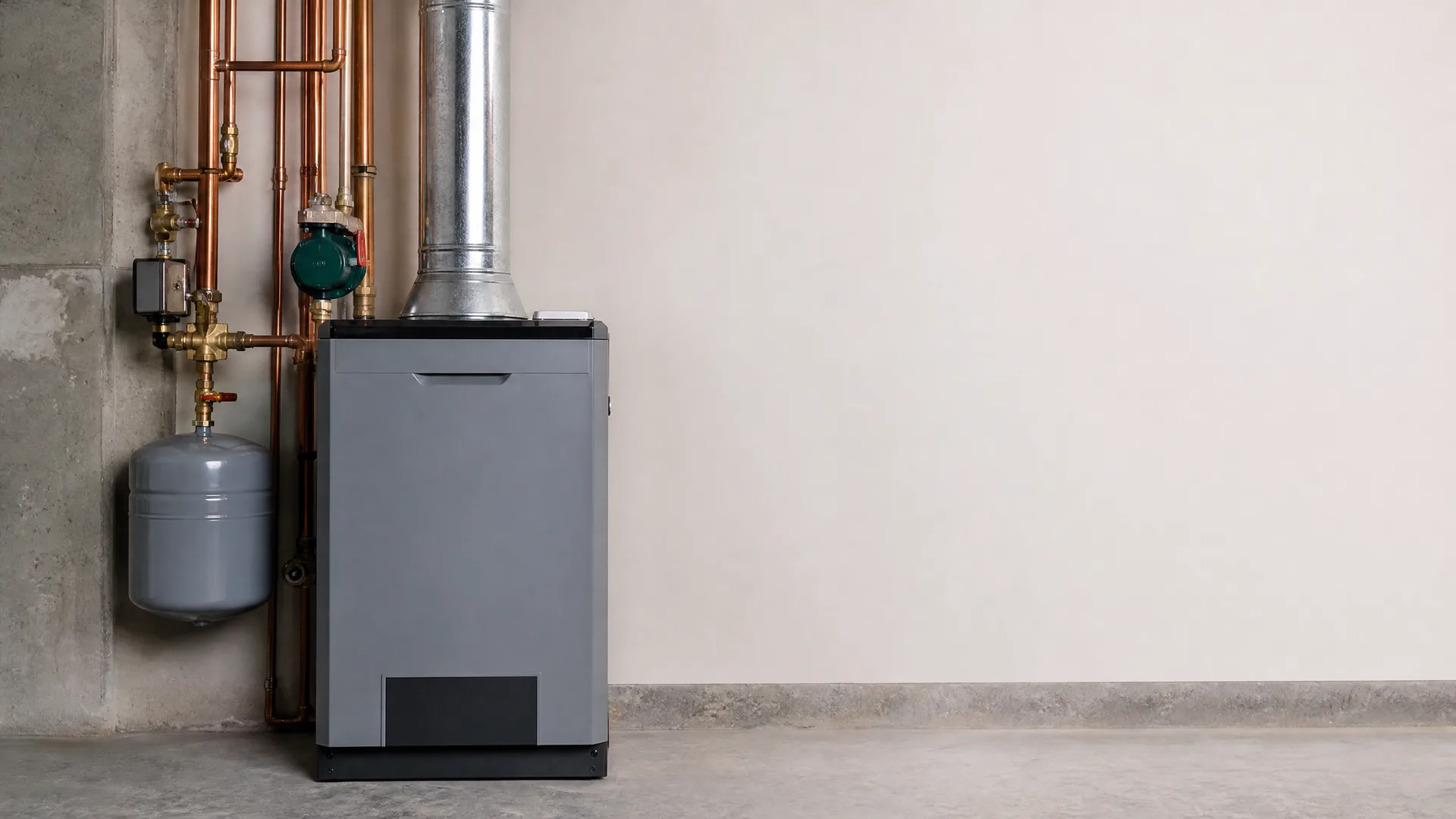
A gray floor-standing boiler with a metal flue pipe, copper piping, a circulator pump and a gray expansion tank, installed against a concrete wall.

The number comes from a calculation

A manual J load calculation weighs your square footage against your windows, your insulation and the coldest night your area typically sees. It outputs a number in BTUs, the amount of heat your house loses on a cold night and the amount your boiler has to replace to keep up. Two houses of the same size can land on different numbers depending on how much glass they have and how old the insulation is. That number is what sizing is actually about.

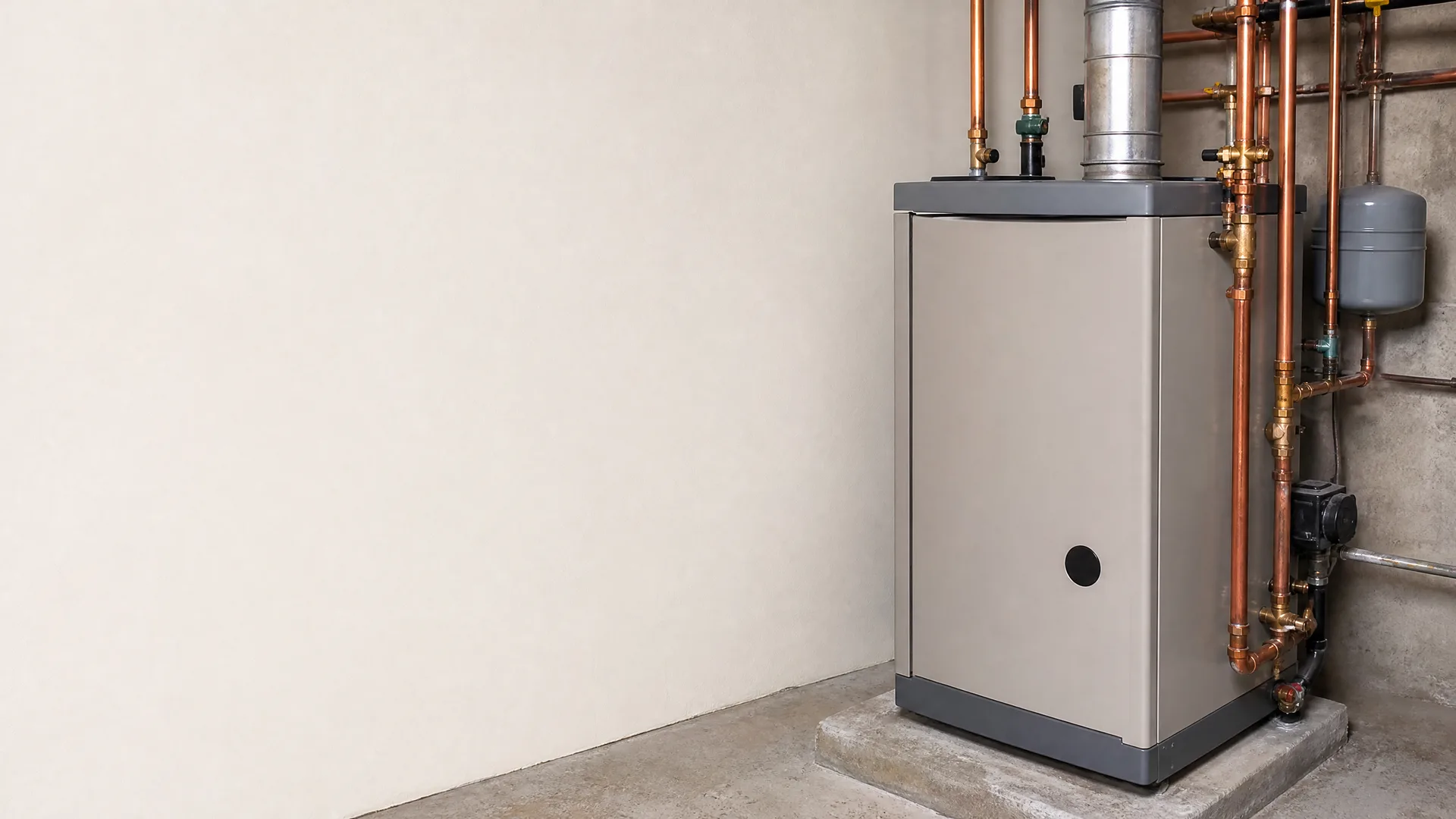
A tall grey floor-standing boiler on a concrete plinth in a corner of a room, with copper pipework, a flue, a circulator pump and an expansion vessel to its right, beside a plain cream wall.

Idaho winters set the floor

The coldest nights your area sees are part of that calculation, and in Idaho those nights go well below freezing for weeks at a stretch. A boiler sized off a mild climate's low temperatures would fall behind here on the nights you need it most. Sizing has to account for the actual lows where your house sits, not an average, because the average night isn't the one that matters. Gas keeps the running cost of a correctly sized unit reasonable even on those nights.

Winter nights average 22°F statewide

On a January night, your boiler is likely working against something close to 22 degrees outside. That's the number a contractor sizes to, not just your square footage, so the unit keeps up on the coldest nights instead of running flat out.

NOAA nClimDiv 1991-2020 county normals weighted by homes

Guess low, and the boiler runs flat out all January trying to catch up, never quite getting there on the coldest nights.

Guess high, and it short cycles instead, firing and shutting off all evening while wearing out parts years before it should.

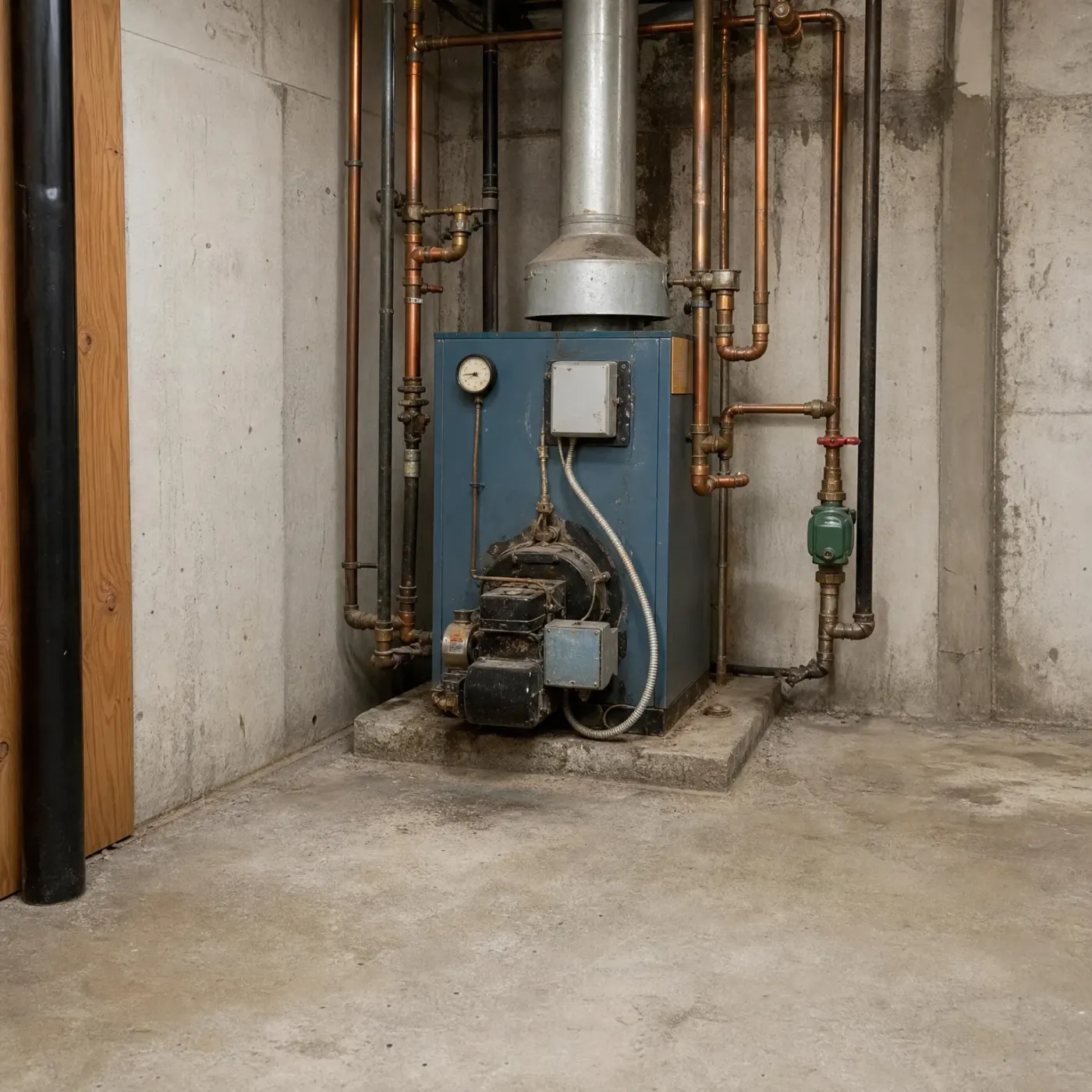
A blue oil-fired boiler with a pressure gauge, burner unit and metal flue sits on a concrete pad in a basement corner, surrounded by copper and black pipes against bare concrete walls.
Before you get your boiler installation
A gray boiler unit on a concrete pad in a basement corner, connected to copper piping, circulator pumps, and a ceiling-mounted expansion tank against bare concrete walls.
After you get your boiler installation
A gray floor-standing boiler on a concrete pad in a basement with concrete block walls, connected to copper piping, a flue vent, and an expansion tank.

Send one request and you're done looking

Skip collecting and comparing quotes for the new boiler.

Send the request and finding a pro stops being your problem.

Hand off the search

It costs nothing to send, and you don't have to hire anyone.

A closed laptop and a cream mug of coffee on a coaster sit on a dark wooden table, with a potted plant at left and a kitchen counter, tiled backsplash and shelf of ceramics in the background.

What the installer actually does with that number

Once a contractor has the BTU figure, sizing the boiler itself is only half the job. The output has to match the near boiler piping, the circulator pump, and the zone valves already running through your house, or the near boiler loop meant to go in alongside it. A boiler sized right on paper can still run wrong if the piping around it is too small or the pump moves water slower than the unit expects. Getting that match right is why the install takes a trained eye, not just a spec sheet.

This is also where most homeowners get stuck on their own. You'd normally be calling around to find someone who does boiler installs rather than just service calls, explaining your square footage and your radiators to each one, then trying to compare quotes that are not sized the same way because no two contractors ran the same numbers. Send one form here and that search is off your plate. You're not vetting installers or repeating your situation on the phone four times. Someone qualified gets your details once and takes it from there.

A gray upholstered sofa with a textured cushion sits beside a dark round side table holding a vase of green foliage, with a table lamp and sheer-curtained window behind.
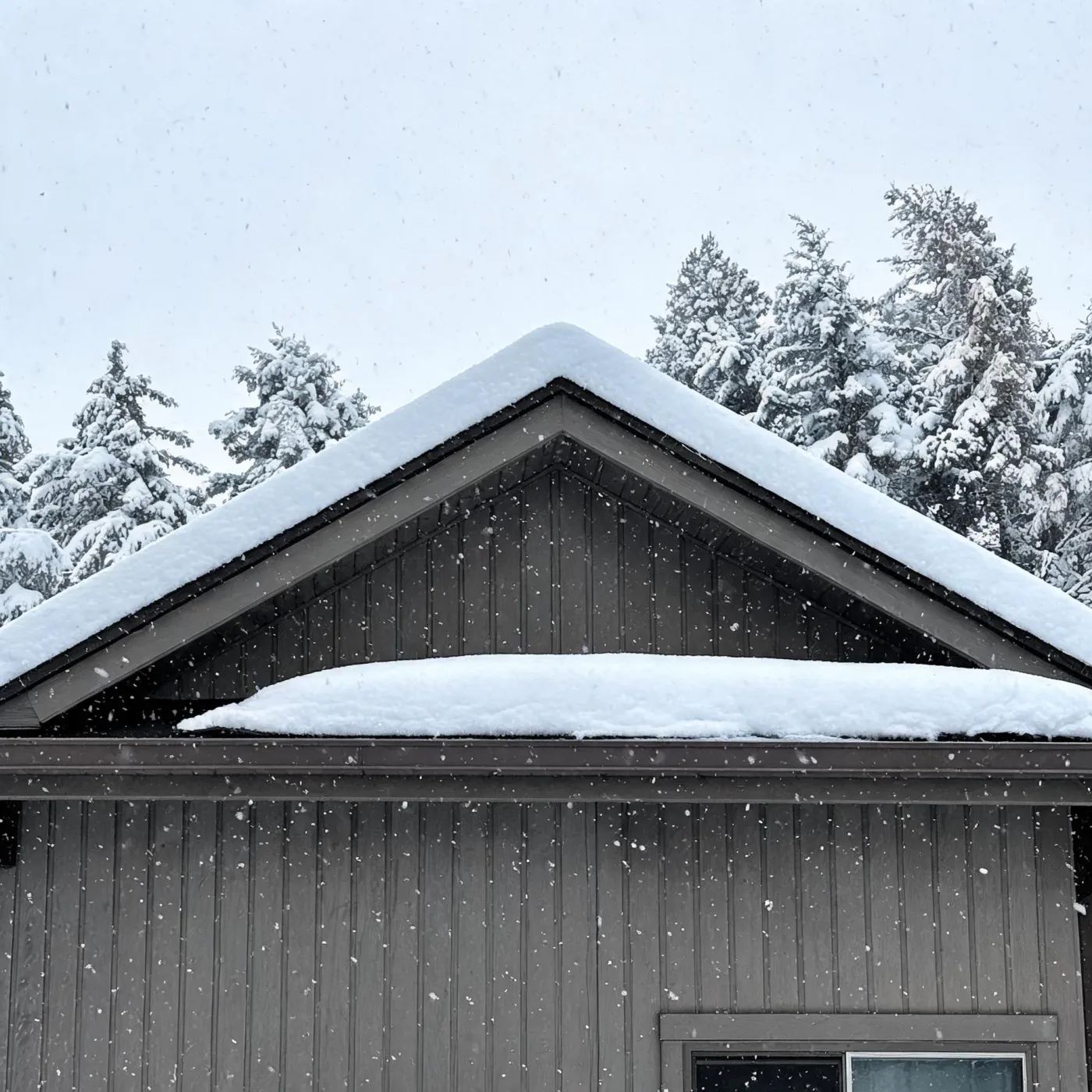
Snow-covered gable roof of a dark brown vertical board-and-batten house during falling snow, with snow-laden conifers behind it under a pale gray sky.

Statewide, winter nights average 22°F, according to NOAA climate data. That's the cold your boiler is holding against most nights from December through February, not an occasional cold snap. A boiler sized for your house keeps the water moving at a steady rate all night and holds the rooms where you want them. One sized wrong shows up fast at 22 degrees: either it runs flat out and still falls short, or it fires and shuts off over and over trying to keep up. Either way you'll notice it in how long the heat takes to feel even through the house, and in how often you hear the unit kick on.

NOAA nClimDiv 1991-2020 county normals weighted by homes

A gray boiler on a concrete pad in a basement, connected to copper piping, valves, pumps and a gray expansion tank, with a concrete wall on the left and a brick wall on the right.
A boiler matched to the load runs quiet, with hot water moving steadily through the pumps and piping.
A dark cast-iron boiler with copper piping, pressure gauge, and a gray expansion tank sits on a concrete pad in a basement corner with concrete block and brick walls.
An aging boiler like this one struggles under the wrong load, and the strain shows in the piping and gauges around it.

The right size, settled

  • The right boiler size comes from a load calculation, not square footage alone.
  • Statewide winter nights average 22°F, and that's the cold a correctly sized unit is built to hold against.
  • A boiler sized too small runs flat out all January and still falls behind on the coldest nights.
  • A boiler sized too large short cycles, firing and shutting off repeatedly while wearing out parts early.
  • Matching the output to your near boiler piping, circulator pump and zone valves is as important as the BTU number itself.
  • Sized right, a boiler holds a steady pace through the coldest nights instead of straining or stopping short.

A boiler sized for your house is a number built from your square footage, your windows, your insulation and the cold your area actually sees, not a guess carried over from the old unit. In Idaho, that cold is real. Winter nights statewide average 22°F, and that's what the unit is holding against from December through February, not just on the worst night of the year. Get the number too low and the boiler runs flat out all winter without catching up on the coldest stretches. Get it too high and it short cycles, firing and shutting off over and over, which wears out parts long before it should need replacing. The BTU figure is the start of the job, not the whole of it. A contractor still has to match that output to the piping near the boiler, the circulator pump, and the zone valves already running through your house, because a unit sized right on paper can still run wrong if the rest of the system doesn't match it. Done right, none of this shows up as a problem. The boiler holds a steady pace through January and February, the pump moves water at the rate the unit was built for, and the pressure stays even without strain anywhere in the system. That's what correct sizing actually buys you: not a bigger or smaller boiler, but one that matches the house it's heating and runs like it.

A woman with dark hair in a bun reclines on a sofa with her eyes closed, wrapped in a cream fleece blanket, a closed blue hardcover book resting in front of her, with a lit lamp and a vase of dried flowers in the background.
A smiling bearded man in a navy sweater sits at a candlelit dinner table with a glass of red wine, a bowl of salad, and plates of food in the foreground.

Finding a pro stops being your job

Getting the right BTU number is one thing. Finding a contractor who will actually run the load calculation instead of eyeballing your old boiler and quoting the same size back is another. Send the form and that search is done: no calling around, no explaining your house three different times, no sorting quotes from people who never asked about your windows or insulation. You get matched with a contractor who sizes the unit to your house and installs it to match the piping and pump already in place.

Send my request

Fill out one short form instead of calling around.

No charge to send it. You decide if you hire them.