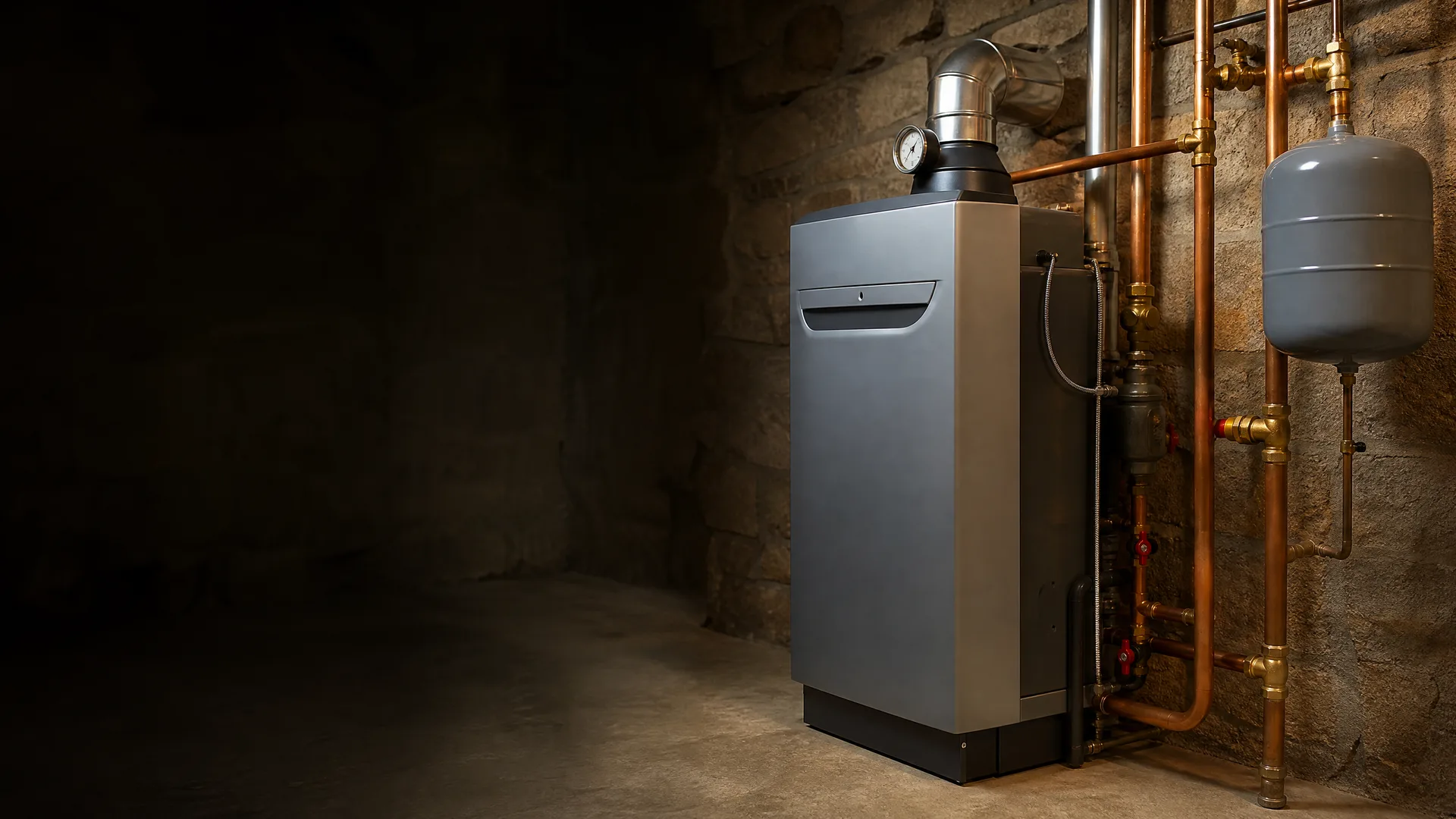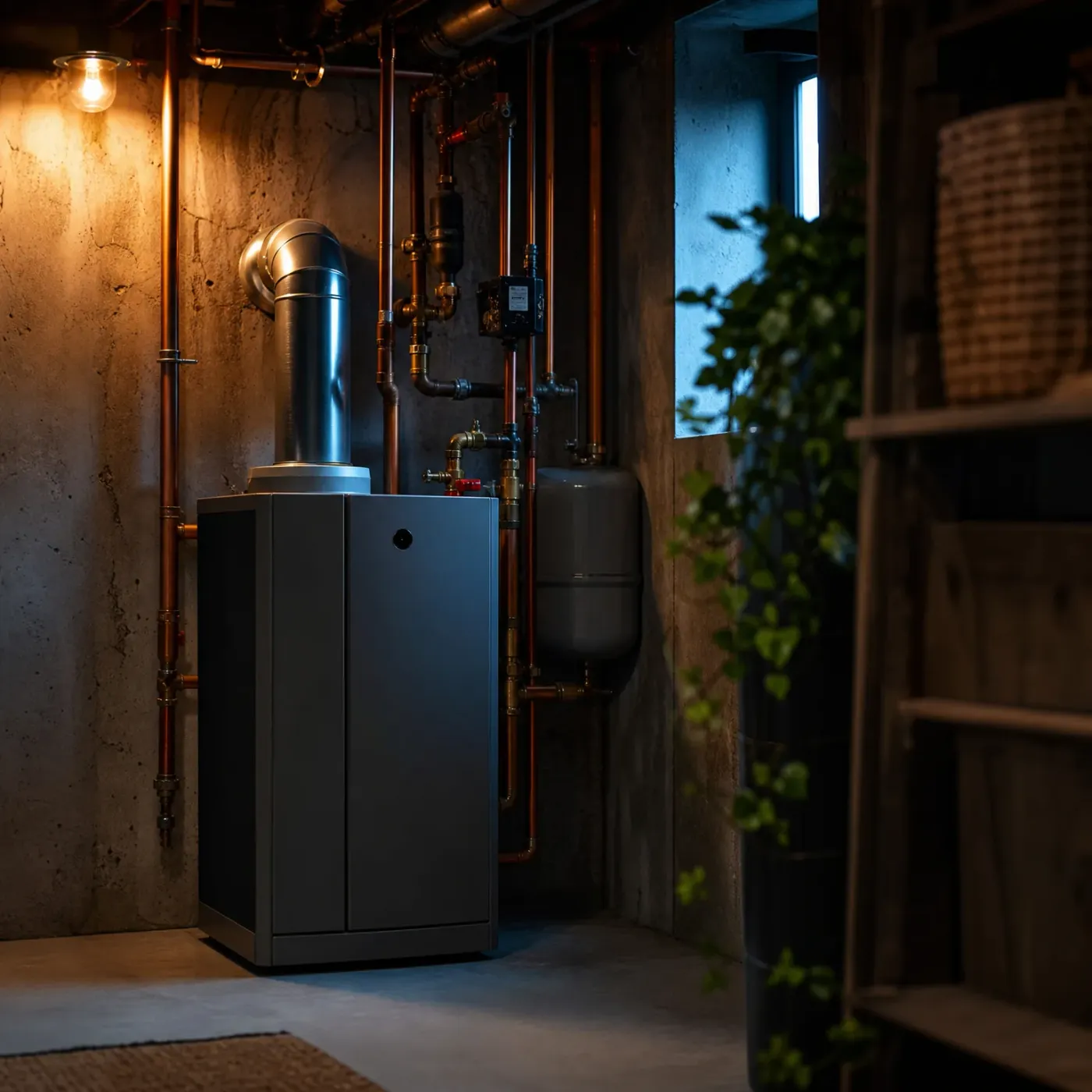
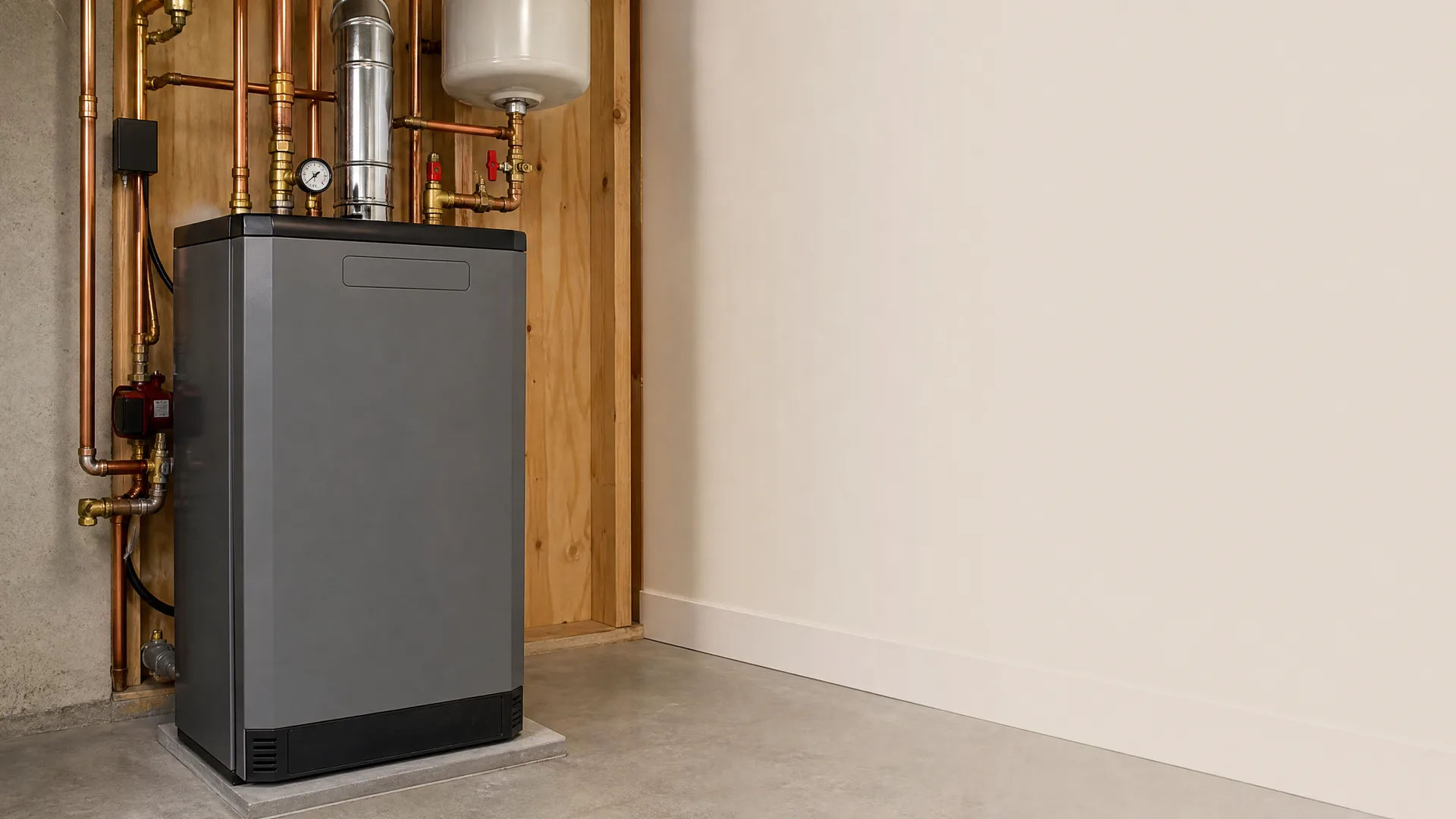
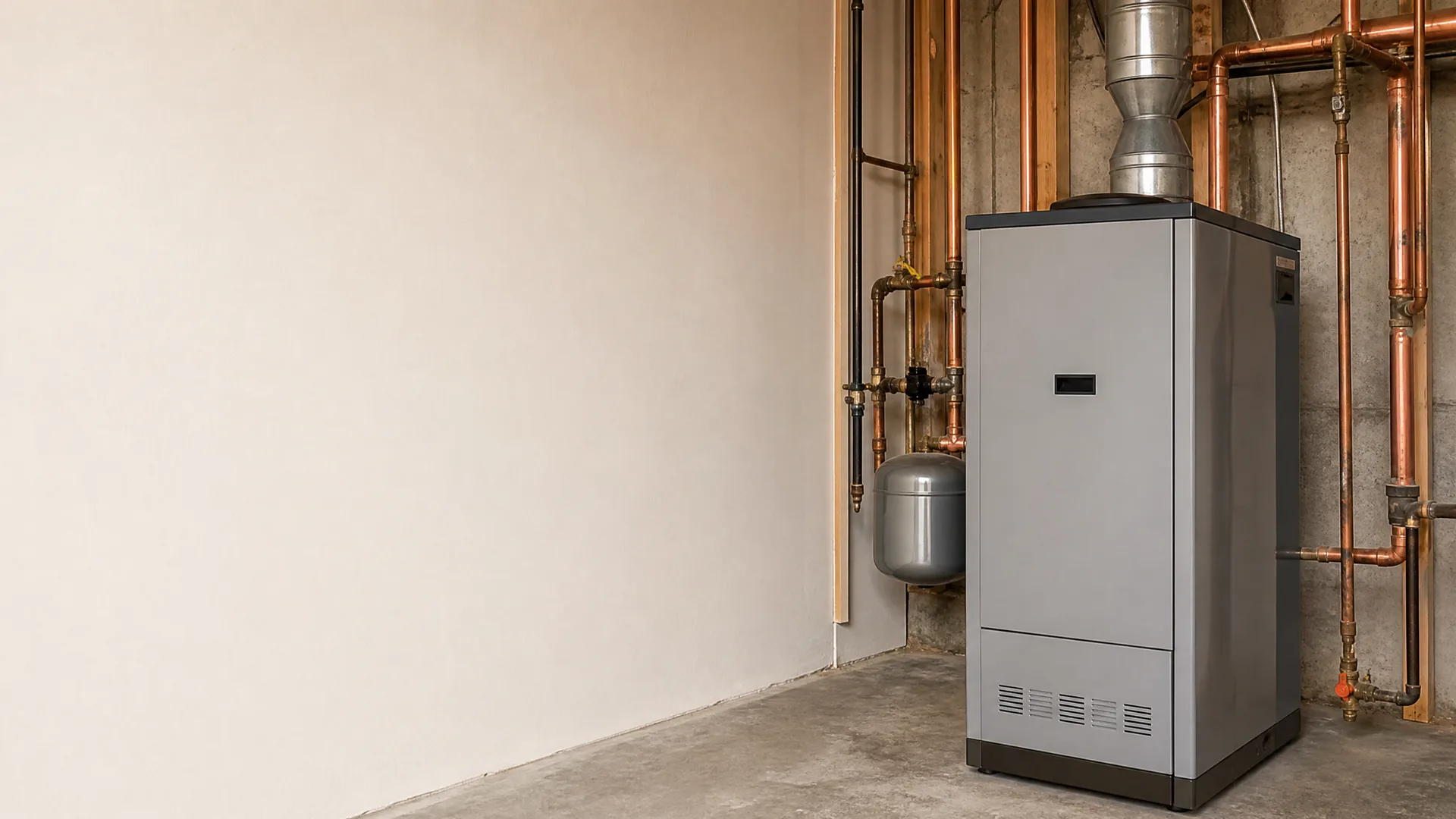









A dark grey floor-standing boiler with a metal flue stands against a concrete basement wall, surrounded by copper pipework, valves and a wall-mounted expansion tank, with ivy and a shelving unit at right.

A pro who works on boilers

Repair or replace an old boiler in Idaho

An old boiler can usually be patched again, but at some point the question is whether it's worth it. That depends on what's wrong, how old the unit is, and what it would cost you in gas to keep running it through another Idaho winter. This page walks through how to tell, and gets you to a contractor who can look at your boiler and tell you straight.

Match me with a pro

A boiler worth repairing is one with a single failed part, a circulator pump, a low-pressure valve, an igniter, and a tank that isn't leaking. Replace it instead when the heat exchanger is cracked or rusted through, or when it needs a repair every winter. Most Idaho homes run gas, and gas boilers lose efficiency as they age the same way any combustion appliance does, burning more to make the same heat. Winters here are cold enough that a boiler on its way out tends to show it fast, short cycling, cold rooms, pressure that won't hold. If yours is original to the house, that age alone is worth checking against the unit's rated life before you spend on another repair. Either way, the fix depends on what's actually failed, not just how old the boiler is.

A dark grey floor-standing boiler on a concrete floor in front of a plywood wall, with copper pipes, valves, a pressure gauge, a flue pipe and a white expansion tank above it, beside a plain light-coloured wall.

Why the heat exchanger decides it

A cracked or rusted heat exchanger is the one failure that ends the conversation. It's the part that transfers heat from the burner into your water, and once it's split or corroded through, it can let combustion gas mix into the water loop. A contractor can't patch that safely. Everything else on a boiler, pumps, valves, igniters, gets replaced on its own without touching the exchanger. When that one part fails, the unit is done, no matter what else on it still works.

A gray boiler unit with a metal flue pipe stands in a basement corner, surrounded by copper piping and an expansion tank against a plain light wall and concrete floor.

What another winter of patching costs

A boiler loses efficiency as it ages even between breakdowns, and an old one works harder to hold the same water temperature through an Idaho winter. Gas is what pays for that extra work, not the repair bill. Power here is cheap, but most Idaho homes heat with gas, so a boiler running below its rated efficiency shows up on the gas side of the bill all winter, every winter it stays in, not just the month something breaks.

A man seen from behind raises his hand to wave at a woman standing in the open front doorway of a single-story house with gray shingle siding, white columns and a gabled porch entry.

What an aging boiler is doing to your gas bill

Gas is how most houses in Idaho heat, and power here is cheap, so the boiler is quietly the biggest swing in your winter bill either way. A unit that short-cycles, or takes longer to bring the house up to temperature than it used to, is burning more gas to do the same job it did five years ago. You notice it as a bill that creeps up each January even though you haven't changed the thermostat. You might also notice rooms that used to heat evenly now have a cold corner, or the boiler running long after the house feels warm enough.

None of that tells you on its own whether to repair or replace. It depends on what's actually failing inside the unit, and that's not something to guess at from the symptoms. A contractor who looks at your specific boiler, your gas use, and what it would take to keep it running can tell you which side of that line you're on. Once you send the details, that's who gets in touch, matched to what your house needs rather than a general estimate.

A living room corner with a beige upholstered armchair holding navy and striped cushions, a small round wooden side table with a carved bowl and a potted green plant, a framed landscape picture on a pale wall, built-in shelving, and a curtained window.
A gray-haired bearded man in a dark coat and scarf dusted with snow stands smiling in a dimly lit entryway with a white front door, a side table with a lit lamp, an oval mirror, and a patterned rug.
An older bearded man in a dark snow-dusted coat and gray scarf stands just inside a dimly lit home entry, with a framed picture, lit table lamp, and an adjoining room with a fireplace behind him, and snow visible through the open door.
A gray-haired, bearded man in a dark snow-dusted coat stands smiling in a dimly lit entry hall with a staircase, a lit table lamp, a framed picture, and a living room visible through a doorway.
An older man with gray hair and a beard, wearing a dark jacket dusted with snow, stands smiling in a dimly lit hallway with lamps and a living room visible behind him.
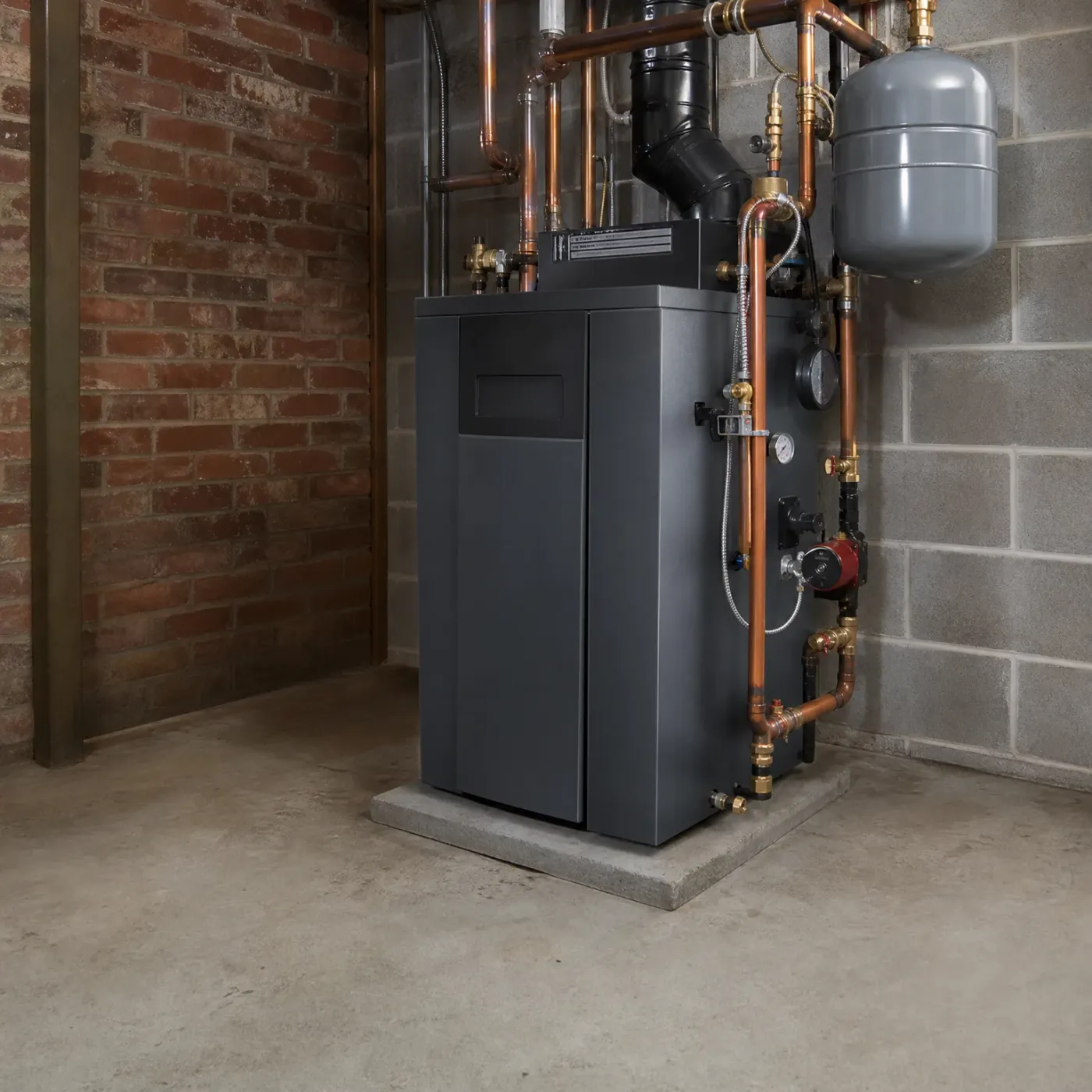
A dark gray floor-standing boiler on a concrete pad in a basement, connected to copper piping, valves, a circulator pump, a gauge, a black flue pipe, and a gray expansion tank, with a brick wall on the left and concrete block wall behind.
Clean connections, steady pressure, no sign of a leak anywhere along the pipes.
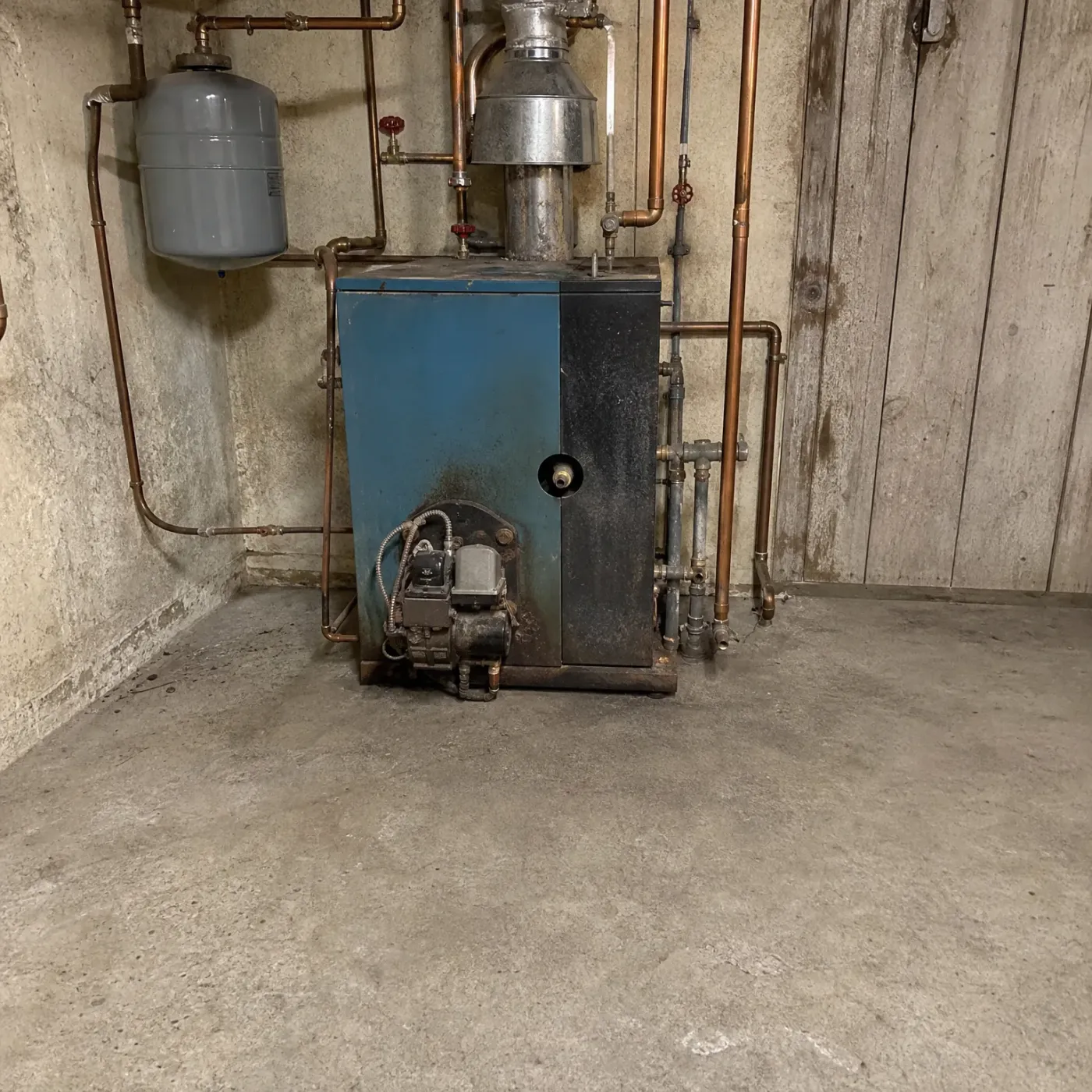
A blue and black boiler with a burner unit, flue, expansion tank and copper and steel piping stands on a concrete basement floor against a concrete wall and wooden plank partition.
Corroded fittings and an aging tank crowded into the corner, past due for a straight answer.

The burner doesn't push heat through your house by itself. It brings the water up to temperature, and the circulator pump is what sends that hot water out to the radiators or baseboard loops. Two separate jobs, two separate parts, and either one can fail without the other.

The aquastat is what tells the burner when to fire, based on the water temperature it reads. When it drifts out of calibration, you get a boiler that short-cycles, or a house that never quite reaches the temperature you set it to.

Pressure matters too. A sealed system should read somewhere around 12 to 15 psi with the water cold, climbing some once it heats. If a pressure relief valve is weeping or dripping, that's not a part failing on its own. It's responding to pressure it's seeing, and the cause is worth tracking down.

Sediment is the quiet one. It settles at the bottom of the tank over years and sits between the burner's heat and the water it's supposed to warm, so the unit runs longer to do the same job it used to do faster.

How a boiler actually works

  • A boiler brings water up to temperature and holds it there, cycling the burner on and off to match the heat your house is losing.
  • The circulator pump is what actually moves hot water out to the radiators or baseboard loops, not the burner itself.
  • Pressure in a sealed system should sit around 12 to 15 psi when the water is cold, and it climbs some as the water heats.
  • An aquastat tells the burner when to fire by reading the water temperature, so a faulty one can cause short cycling or a house that never quite warms up.
  • Sediment settling at the bottom of the tank insulates the water from the burner's heat, which makes the unit run longer to do the same job.
  • A pressure relief valve that weeps or drips is responding to pressure it shouldn't be seeing, and it's worth having someone check what's pushing it that high.
A woman wrapped in a thick beige fleece blanket sits on a sofa with an open book on her lap, beside a lit table lamp, with a frost-covered window behind her.
An older woman with gray hair in a bun and glasses, wearing a beige knit sweater, smiles while looking to the side in a warmly lit kitchen, with a loaf of bread on the counter in the foreground and a snowy scene outside the window.
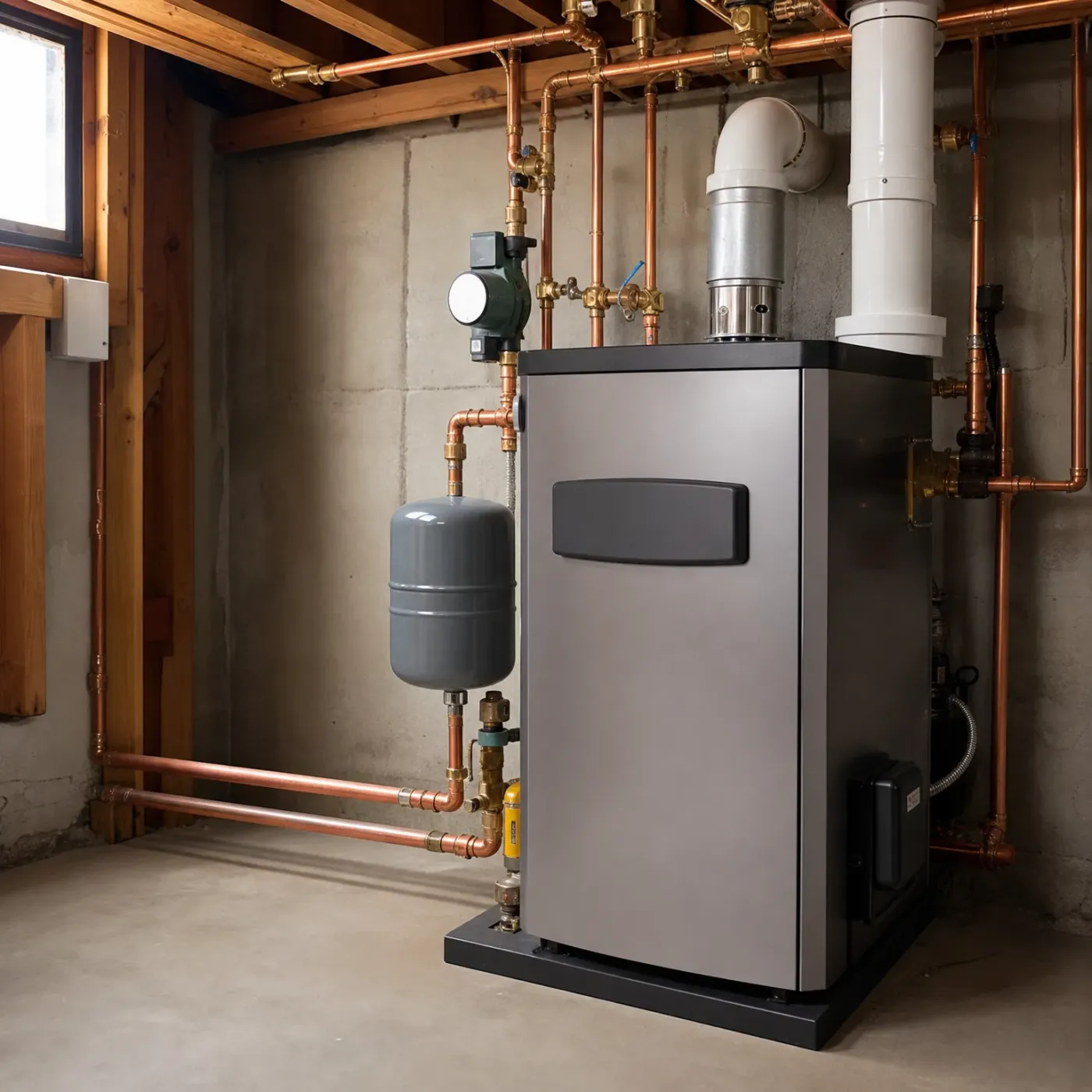
A gray boiler on a black base in a basement with concrete walls, connected to copper piping, a circulator pump, a gray expansion tank, and white and metal flue vent pipes.

Get your boiler to the right pro

One request ends the search for a boiler installer.

A local installer who puts in boilers gets your project.

Find my pro

Asking costs nothing, and the choice to hire stays yours.

How do I know if my boiler is original to the house?

You've never had a reason to look closely at the boiler since you bought the house, and now that it's acting up, you realize you don't actually know if it's the same unit that came with the place or something a previous owner put in. There's no sticker you remember checking, and no paperwork you've dug up yet.

Check the data plate on the boiler itself, not the house's age

Every boiler has a metal data plate on the jacket, usually near the front or side, with a manufacture date stamped or printed on it. That date tells you what you actually have, since the house's build year doesn't tell you anything about the equipment inside it. Houses get boilers swapped out over the decades, so a home built in 1965 can easily be running a unit installed ten years ago. If the plate is too worn to read or missing, the model and serial number stamped near it can still be looked up by a contractor who knows how to trace it. That's the real answer, not a guess based on how old the house looks.

A dark gray floor-standing boiler in a concrete-walled basement, connected to copper piping, circulator pumps, a gray expansion tank, and a cream-colored storage tank to the left.

Running the way it should

This is a boiler doing its job. Pressure holds steady, the fittings are dry, and the pumps cycle without a fight. A setup like this is worth repairing when something does go wrong, because the rest of the system has years left in it.

A gray residential boiler with a metal flue pipe stands in a concrete-block basement corner, surrounded by copper piping, valves and a gray expansion tank.

Past the point of patching

Corrosion has worked its way across the fittings, and the tank sits crowded in the corner like it's been ignored for a while. Once rust reaches this stage, the next failure is likely the heat exchanger itself, and that's a replacement, not a repair.

What's the boiler actually telling you

You notice it in small ways first. The burner takes longer to kick on, or it kicks on and off more than it used to. A room that used to heat up fine now stays a little cold. There's a faint metallic or sulfur smell near the unit, or a thin trail of rust around a fitting that wasn't there last winter. Maybe the pressure gauge won't hold steady anymore, or you've topped off the water twice this month. None of that means you need a new boiler tomorrow. It means the system is asking for a look before the cold months push it past what it can handle, and before a small leak or a slow pressure drop turns into a repair you can't put off.

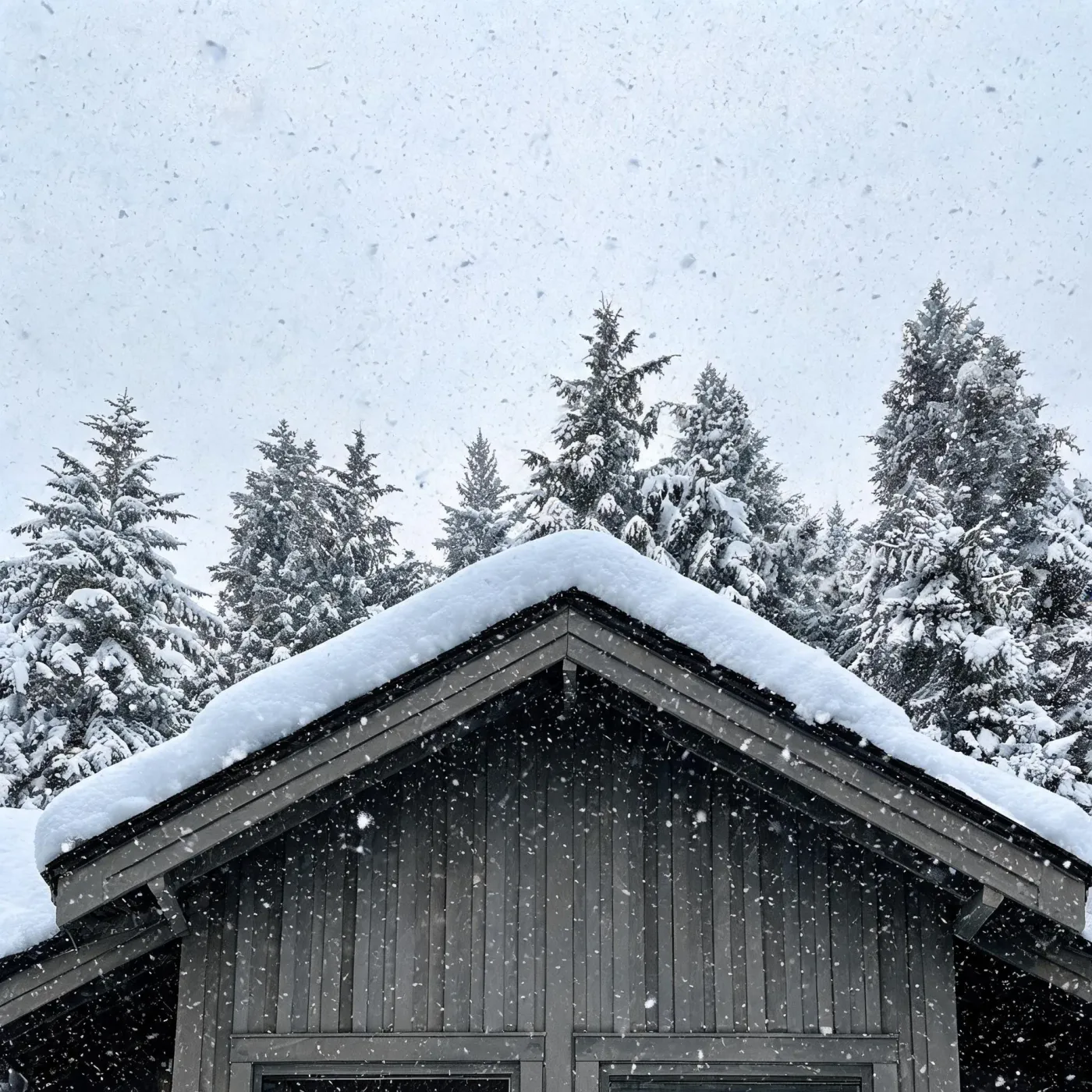
The gable end of a dark wood-clad building with a thick layer of snow on its roof, with snow-covered conifers and falling snowflakes behind it under a pale sky.

Winter nights here average 22°F statewide, per NOAA, and that's the temperature your boiler is working against most hours it runs. At that kind of cold, the burner stays on longer to hold the house at temperature, and it cycles more often overnight when the house loses heat fastest. An aging unit feels that strain first in the parts already working hardest, the circulator pump, the pressure valve. You'll notice it as a room that takes longer to warm, or a burner that seems to run almost constantly before dawn. A boiler in good shape handles those cold nights without much drama. One that's already struggling tends to show it right around 22°F, not at 40.

NOAA nClimDiv 1991-2020 county normals weighted by homes

A gray boiler on a concrete pad in a basement with painted concrete block walls, copper piping, a metal flue, and electrical control boxes.
Before you get your boiler installation
A gray boiler with a metal flue pipe stands in a basement against concrete and concrete-block walls, connected to copper piping, a circulator pump, and two gray expansion tanks.
After you get your boiler installation

Repair the boiler

Makes sense when it's one part failing and the tank itself is sound. A contractor fixes what broke and you get the rest of winter out of the unit you have.

Get a boiler pro

Replace the boiler

Makes sense once the heat exchanger goes or repairs keep coming back. A contractor can size and install a new unit before the next cold stretch sets in.

Get a boiler pro

Winter nights average 22°F statewide

At 22°F, your boiler isn't idling much overnight, it's holding that line for hours at a stretch. A unit with a failing part works harder to make up the difference. One that's already stressed on a cold night is more likely to show it.

NOAA nClimDiv 1991-2020 county normals weighted by homes

Where this leaves you

  • A single bad part on a sound tank is worth fixing; a cracked heat exchanger ends the question.
  • Idaho winter nights average 22°F, and that cold is what decides whether the unit you have can keep up.
  • Repairs every winter cost you more than the part itself once you count the gas a struggling boiler burns.
  • A contractor who sees the unit in person can tell you straight whether to repair or replace it.
  • Once you send the form, you're not the one tracking down who can look at it.
  • The answer comes down to the heat exchanger, the age of the tank, and what it's costing you in gas now.

The question was never complicated. A sound tank with one bad part is worth fixing. A cracked heat exchanger, or a repair bill that shows up every winter, means the unit is done deciding for itself. Idaho nights average 22°F, and that's the load your boiler is working against for hours at a stretch. A unit that's already struggling shows it on nights like that, and it shows up again on the gas bill, since a boiler fighting a bad part burns more to do the same job. None of that tells you which one your boiler is right now. That takes someone standing next to it, checking the tank for rust, checking the pressure, listening to how the burner cycles. That's not something you can work out from a list of symptoms, and you shouldn't have to. Send the form and the job of finding someone qualified to look at it stops being yours to carry. You don't need to know which contractors in your area handle boiler work or who's worth calling first. That part gets handled once you've sent it in, and you can stop turning the question over on your own. What you're left with is a straight answer from someone who's seen the unit, not a guess based on how old it might be or what it sounds like from the next room.

A gray floor-standing boiler with a flue pipe and pressure gauge stands against a stone basement wall, connected to copper and brass piping and a gray expansion tank.

Matched to your boiler job

Step 1 of 3: Equipment