How long a boiler lasts in Idaho

One request and the search for a pro is handled.

Let a pro reach out

A boiler in Idaho typically lasts 15 to 20 years, sometimes longer with regular care. Boilers wear out slowly, through the iron or steel of the heat exchanger breaking down after years of heating and cooling with each cycle, not from any strain tied to the climate here. Winters in Idaho are the reason the boiler runs as much as it does, and most homes here heat with gas, so the burner and heat exchanger see heavy use for months at a stretch. The hot, dry summers give the system a long rest, which helps it hold up over the years rather than wear it down. If your boiler came with the house, its age is worth checking, since a unit near the upper end of that range is more likely to need attention, and a cracked heat exchanger or a failing circulator pump usually means replacement makes more sense than another repair.


A woman in a knitted shawl sits in a living room with a fireplace, shelves, a sofa with cushions, and a lamp by a bright window, looking off to the side.
A woman with long brown wavy hair in a green shirt over a white top stands in a living room with built-in white shelves, a ceiling fan, a potted plant and a sliding glass door.
A woman with shoulder-length gray-streaked hair in a light gray knit sweater stands smiling and looking off to the side in a living room with a sofa, houseplant, framed picture, and sunlit sliding glass door.
A woman with shoulder-length curly gray hair wearing a gray knit sweater stands near a window with a sheer curtain, looking to the side, with a blurred interior room behind her.

Is your boiler on its way out

You might notice rooms that used to heat evenly now have cold spots, or the boiler takes longer to bring the house up to temperature than it used to. Listen for banging or kettling sounds from the tank, or a burner that clicks on and off more than it should. Water pooling near the base, or rust around the fittings, means the tank itself is giving out. A gas smell is different and matters more: shut the system off and get it checked right away. Put off a failing boiler too long and you risk a cold house in the middle of an Idaho winter, when you need it most.

  1. Water fills the heat exchanger and the burner ignites below it.

  2. Burner fires on gas, heating the iron or steel exchanger.

  3. Heated water leaves the boiler and moves through the pipes.

  4. Radiators or baseboards release that heat into each room.

Repair the Boiler or Replace It

Keep Repairing

  • A boiler that's 10 to 12 years old with one failed part, like a circulator pump or a zone valve, is usually worth fixing rather than replacing.
  • Gas is the main fuel for heat here, and an older boiler running on gas still heats efficiently if the heat exchanger itself is sound.
  • Idaho power is cheap, so a boiler with electric components like an igniter or pump isn't costing you much to run between repairs.
  • If the cold spots or longer heat-up times showed up after a single part failed, replacing that part often brings the system back to normal.
  • A local contractor who services boilers all season can tell you from the symptoms whether the problem is isolated or spreading.

Replace Now

  • Kettling or banging from the tank usually means the heat exchanger itself is scaling or cracking, and that part can't be repaired on its own.
  • A boiler past 15 to 20 years old that needs a major repair is close enough to the end of its life that the repair may not outlast the season.
  • Rooms heating unevenly across the whole house, not just one zone, points to the exchanger losing capacity rather than a single failed part.
  • A new boiler installed now gives you a full 15 to 20 years before you face this decision again.
  • If a contractor who works on these systems every winter is telling you the exchanger is the problem, there's no part to swap that fixes it.
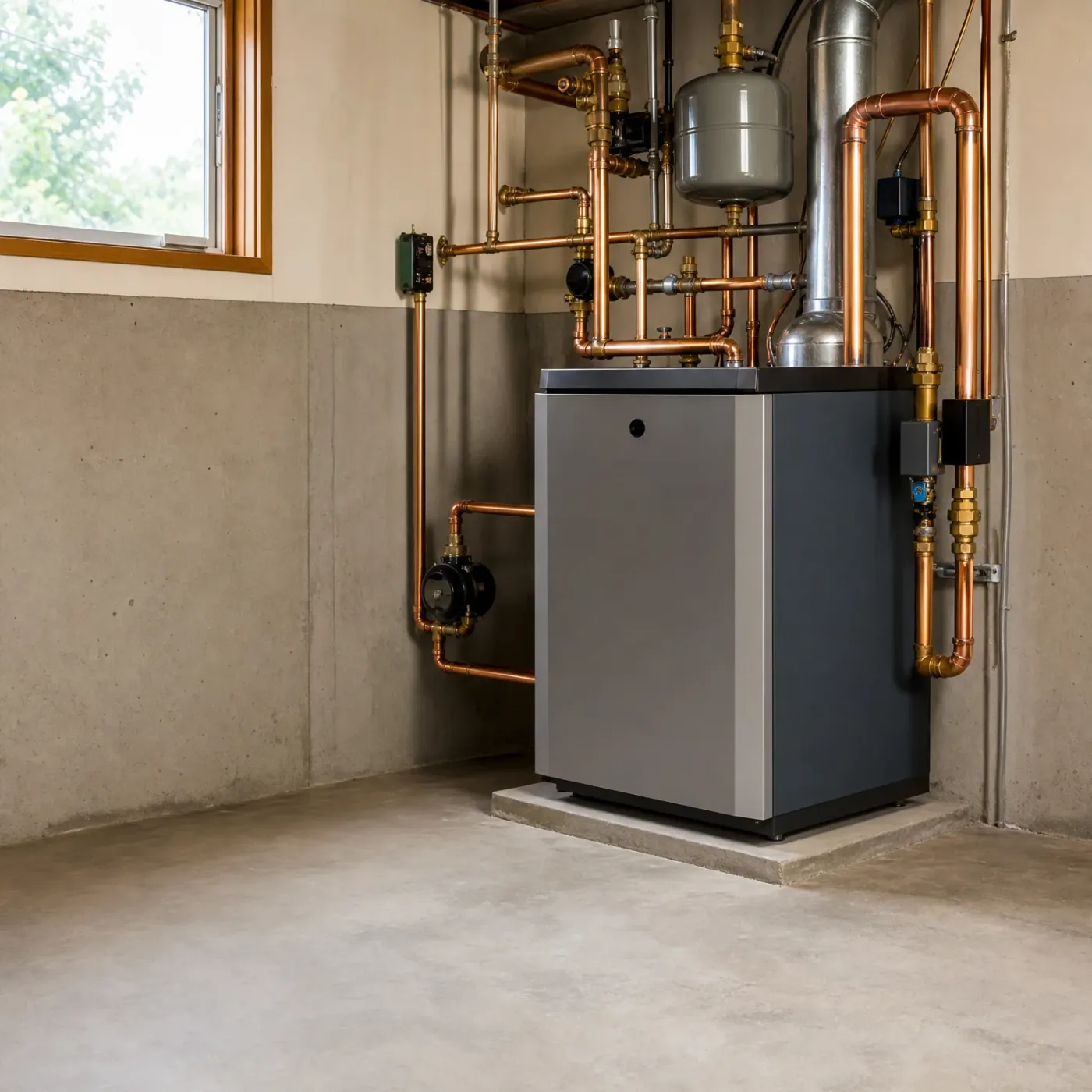
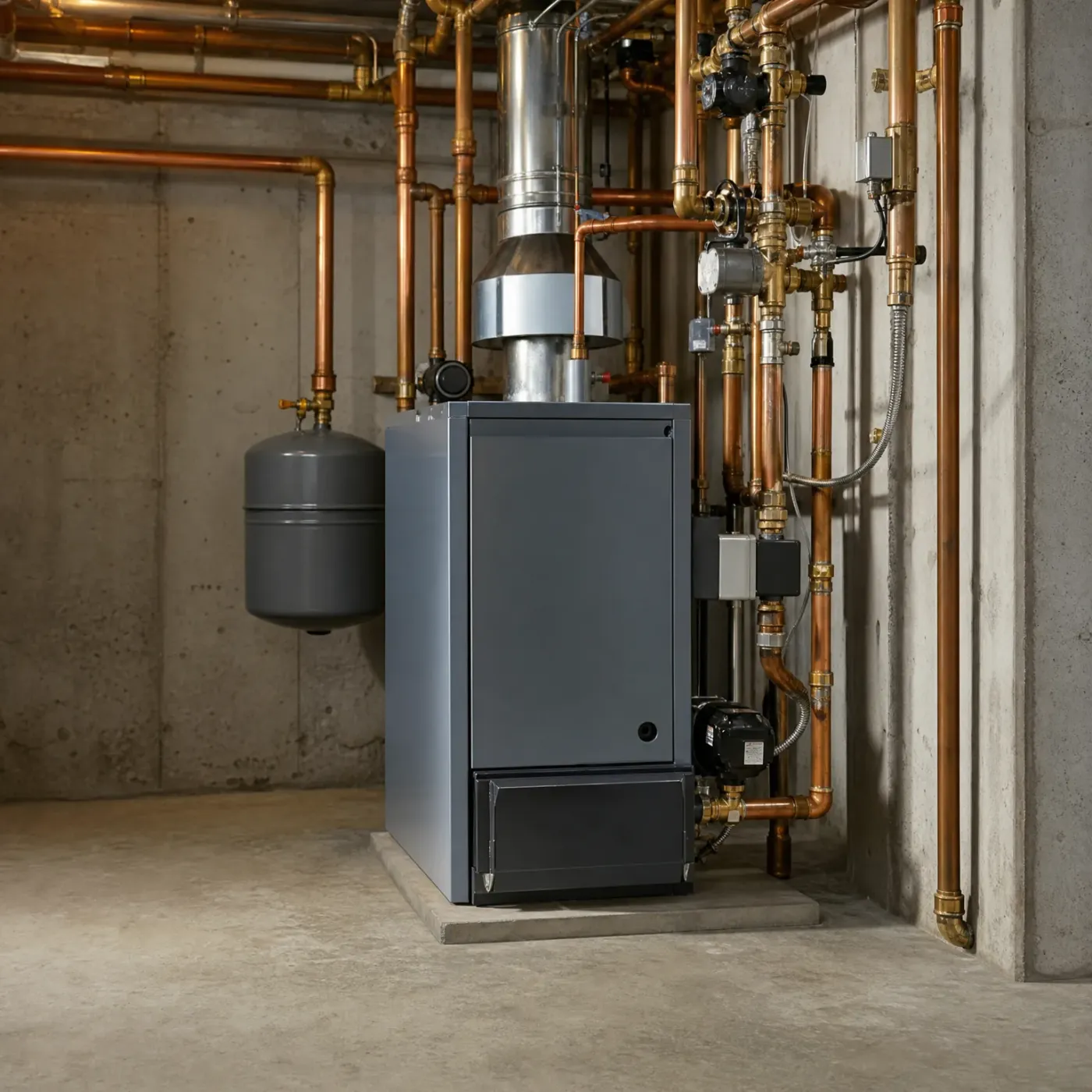
A gray floor-standing boiler on a concrete pad in a basement corner, connected to copper piping, brass valves, a circulator pump, an expansion tank, and a metal flue, with a window at upper left.

Running the way it should

The copper lines stay tight at every fitting, and the circulator pump moves water through them without strain. The expansion tank holds steady pressure as the system heats and cools. A boiler kept like this can run its full 15 to 20 years without surprises.

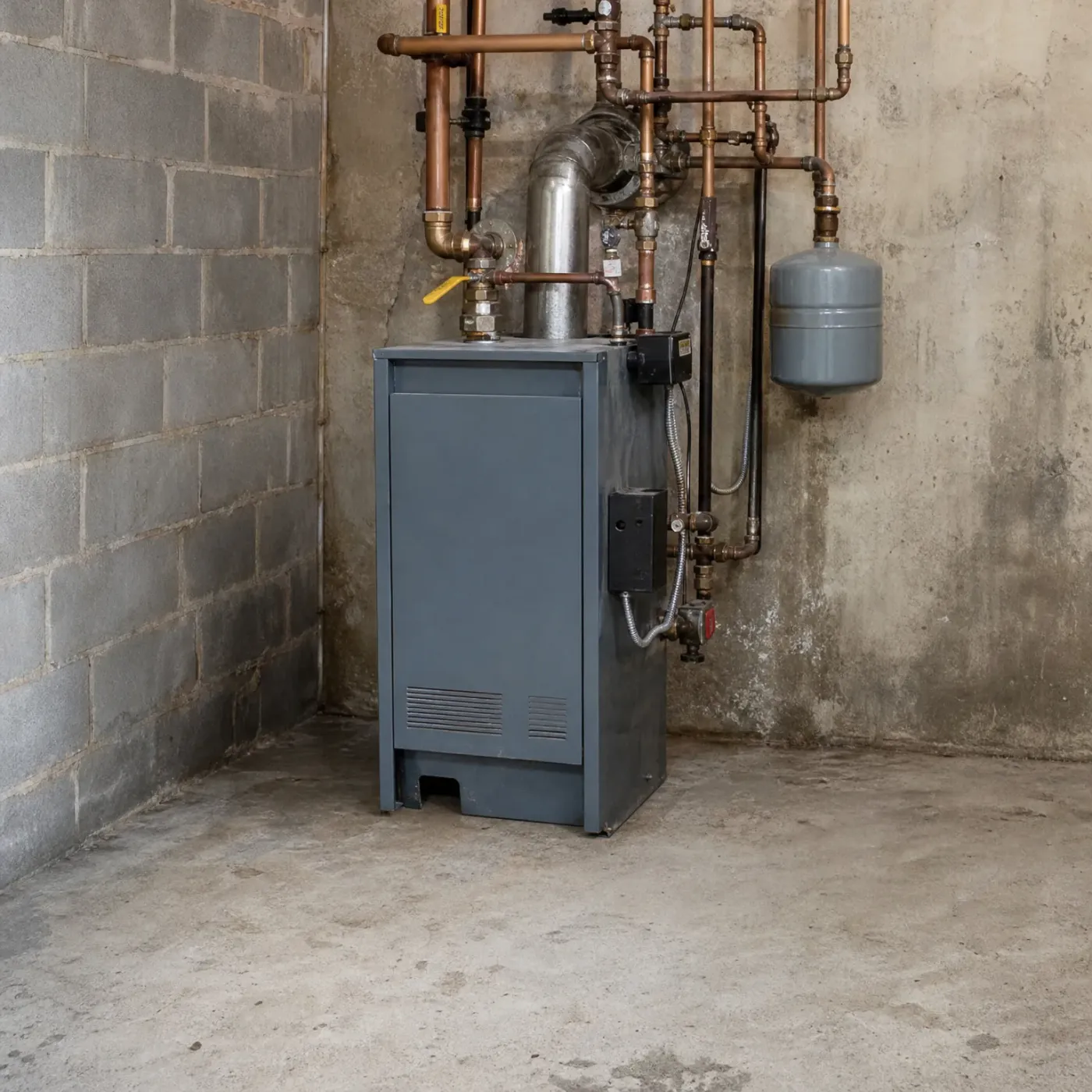
A gray floor-standing boiler in a basement corner with copper and black piping above it, a flue vent, and a gray expansion tank mounted on the concrete wall beside a concrete block wall.

Signs it's falling behind

Rust or mineral buildup on the tank and fittings means water has been sitting somewhere it shouldn't. A boiler crowded into a corner with no room to service the piping or expansion tank gets skipped maintenance, and skipped maintenance is what shortens its life.

Winter nights average 22°F statewide

Those 22°F nights mean your boiler is firing often from December through February, and it needs to hold a steady temperature through the whole stretch, not just kick on now and then. That steady demand is what wears a heat exchanger down over the years.

NOAA nClimDiv 1991-2020 county normals weighted by homes

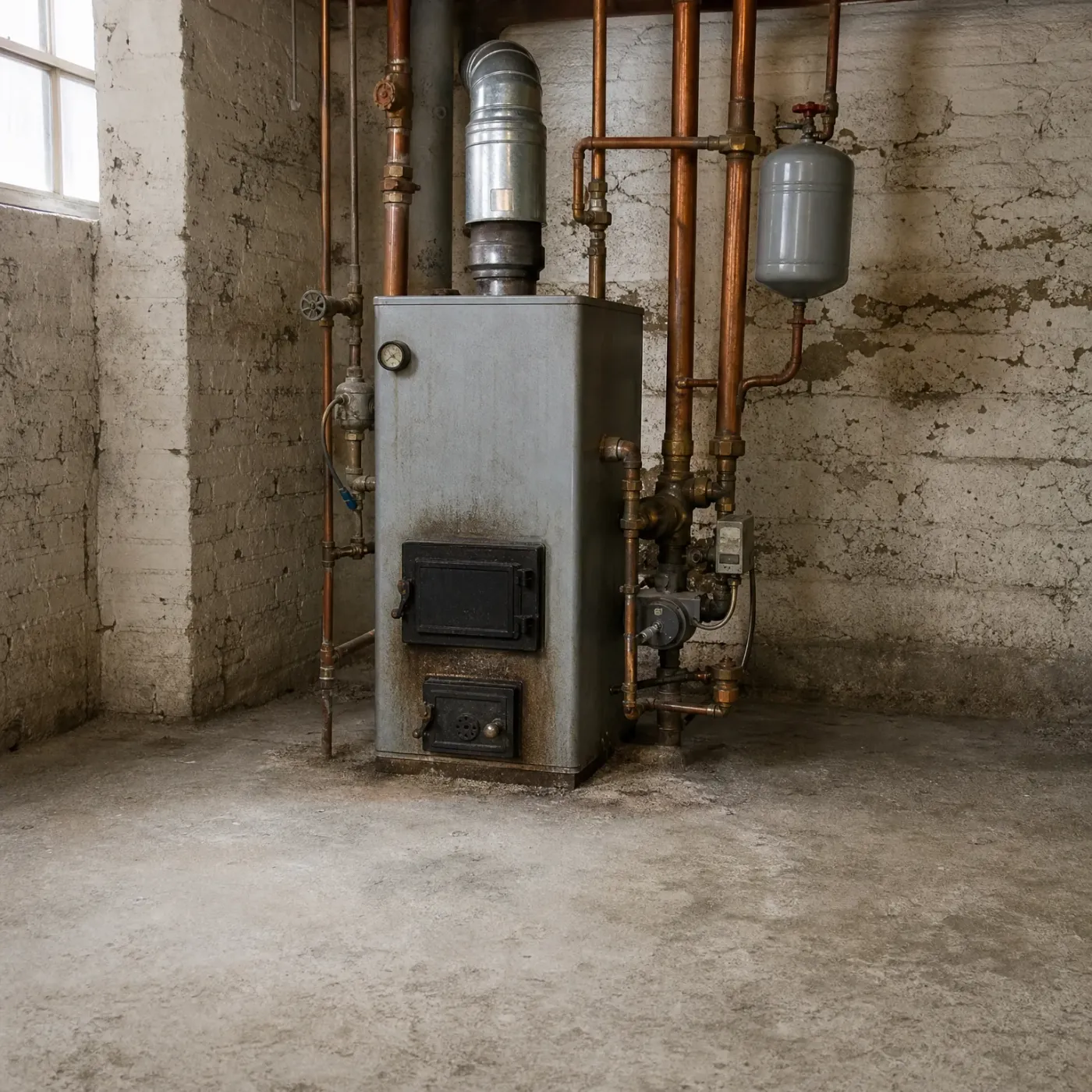
An old gray boiler with copper piping, a flue duct, pressure gauge and an expansion tank stands in the corner of a basement with painted masonry walls and a bare concrete floor.
Before you get your boiler installation
A gray boiler on a concrete pad in a basement, connected to copper piping, valves, circulator pumps, a metal flue, and a wall-mounted expansion tank.
After you get your boiler installation

Let someone else find the pro

A boiler that's past 20 years and giving you cold spots or kettling sounds isn't something to keep patching through another Idaho winter. Nights in the low 20s from December through February mean the system has to hold steady for months, and an old heat exchanger that's already strained doesn't get easier to live with once it starts failing. Finding the right installer, checking licenses, comparing quotes, is its own job on top of a house that isn't heating right. Sending the request here hands that search to someone local who installs boilers in this area every season and knows what Idaho homes need to get through the winter ahead. Only one contractor gets your request, so you're not fielding calls from five companies while you're trying to decide. With gas as the main fuel here and power cheap, a new boiler sized right for your house is a straightforward swap for someone who does this work regularly. Send the request and let that be the next step, not something still sitting on your list.

What a Boiler's Lifespan Comes Down To

  • Most boilers in Idaho run 15 to 20 years, and a few go longer with regular care.
  • Cold spots, kettling sounds, or a burner that clicks without lighting are signs the heat exchanger is wearing out.
  • A boiler 10 to 12 years old with one failed part, like a circulator pump or zone valve, is usually worth fixing.
  • One past 20 years and already showing these signs is past the point where repairs make sense.
  • Winters here push the system to hold a steady temperature for months, and that steady demand is what wears the heat exchanger down over time.
  • A local, licensed contractor who services this equipment every season knows which of these signs means it's time to replace rather than repair.

A boiler in Idaho holds up for 15 to 20 years under normal use, and the way it fails tells you most of what you need to know. The heat exchanger is the part that gives out first, worn down by years of firing up and cooling off through every winter it's run. That's why the signs matter more than the age on paper. Cold spots in rooms that used to heat fine, kettling or banging from the tank, a burner that clicks but won't catch, these point to a heat exchanger on its way out. How you respond depends on where the boiler stands. One at 10 or 12 years with a single failed part, a circulator pump or a zone valve, still has life in it and is worth fixing. One past 20 years already showing these signs has reached the point where another repair just buys a little time before the next one. Idaho winters don't give the system much of a break. Nights in the low 20s from December through February mean the boiler has to hold steady heat for months at a stretch, and that steady demand is what ages the heat exchanger faster than anything else in the system. A local contractor who works on boilers all season knows the difference between a part worth replacing and a heat exchanger that's done, and can tell you which one you're looking at.

A woman with her hair in a bun holds a sleeping young child against her chest, both wrapped in a textured beige knit blanket on a sofa in a dimly lit room with a lamp, framed picture, and bookshelf behind them.
A gray-haired woman in a cream knit sweater stands in a dimly lit kitchen at night, looking to her right, with a round loaf of bread in the foreground and a dark window and potted plant behind her.

Boiler Installation

One request and it's handed off

Your request goes to one pro, not a list of companies.

A black-framed smartphone standing upright against a plain white background, its screen filled with solid green.
Step 1 of 3: Equipment